
Why Ljubljana Is a Walking City
Ljubljana was practically designed to be explored on foot. The historic centre is compact, flat, and largely pedestrianized, and the Ljubljanica River loops through the middle of it like a built-in handrail — follow the water and you’ll never be far from a bridge, a café terrace, or a landmark. The only genuine climb is up to the castle, and even that is a short one. The upshot: you can see almost everything that matters without ever touching a bus.
The routes below aren’t rigid — they’re flexible loops anchored on the same handful of landmarks, so you can stitch them together, shorten them, or peel off whenever something catches your eye. That’s the spirit of walking Ljubljana: follow the river, let the bridges pull you across, and treat the small detours as the whole point. If you want a more tightly scripted version of the central loop, our self-guided Old Town walking tour turns it into a step-by-step itinerary.
Because the city is so walkable, you’ll rarely need transport — but if you do want to extend your range to the edges, the getting around guide and BicikeLJ bike-share are the easy add-ons.
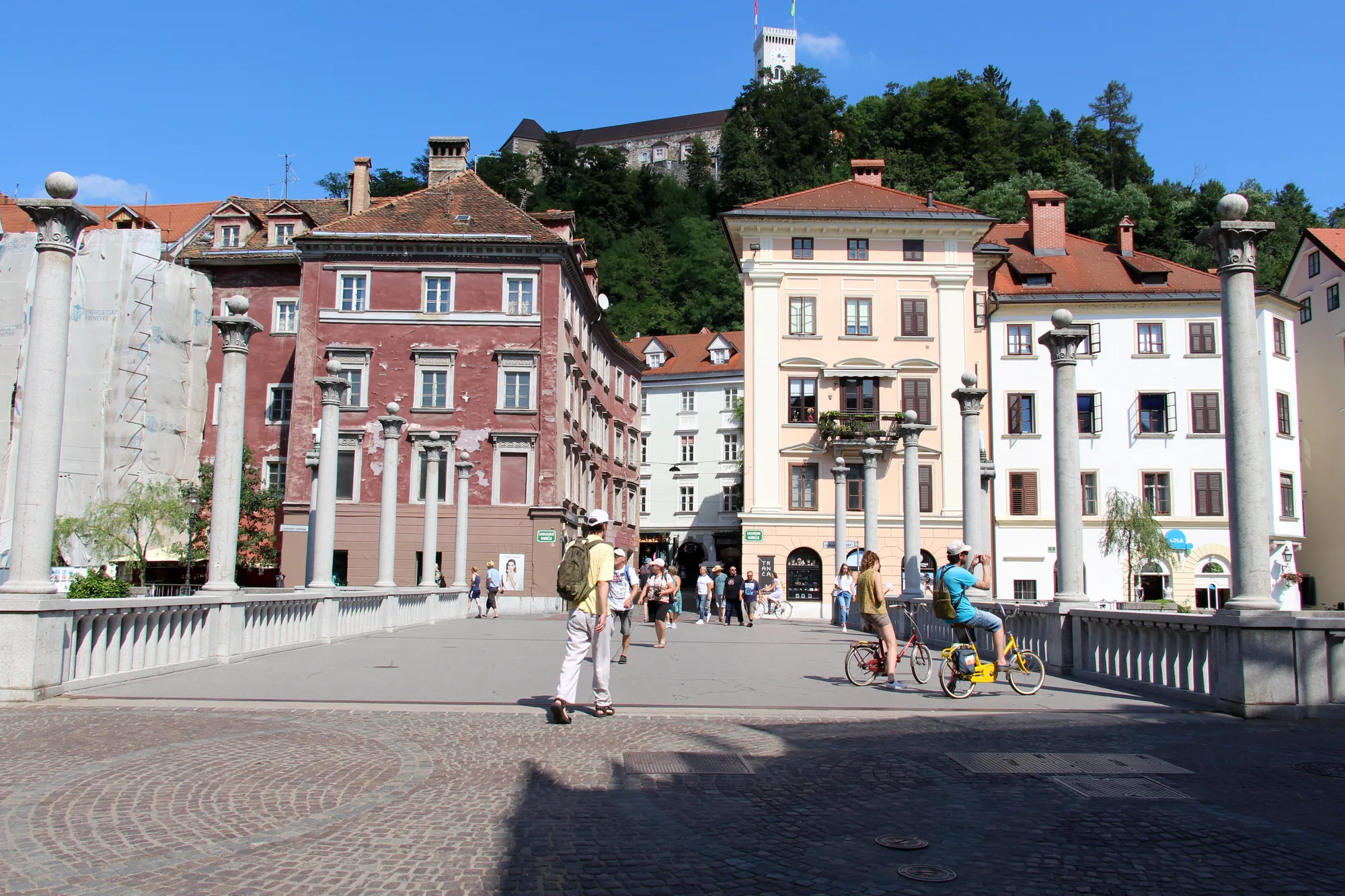
Map: Route Anchors
Ljubljana is small enough to walk, but this map helps you visualize the “anchors” that show up in most great loops. Use it to combine routes (Old Town + castle + river) without backtracking.
Classic Old Town + Bridges Loop
Distance: ~3–4 km | Duration: 1.5–2.5 hours | Difficulty: Easy
Start at Prešeren Square, cross the Triple Bridge, and follow the Ljubljanica toward the Central Market. Continue to the Dragon Bridge, loop back through the Old Town lanes, then finish with a riverside coffee.
Highlights: Prešeren Square, Triple Bridge, Central Market arcades, Dragon Bridge, riverside terraces.
Castle Hill Walk (Up + Scenic Down)
Distance: ~2–4 km | Duration: 1–2 hours | Difficulty: Moderate (short climb)
Walk up from Old Town streets to Ljubljana Castle (or ride the funicular one way). Spend time at the viewpoints, then descend via quieter forest paths for a “city-to-nature” feeling in minutes.
Highlights: Castle viewpoints, city panoramas, shaded trails, golden-hour photo spots.
Tivoli Park → Rožnik Loop
Distance: ~4–7 km | Duration: 1.5–3 hours | Difficulty: Easy–Moderate
Enter Tivoli Park, stroll the main promenade, then continue toward Rožnik for a gentle climb and forest air. Return via a different path for variety, then finish back in the center.
Highlights: Green corridors, outdoor photo exhibits, picnic spots, café stops, leafy shade.
River to Špica + Gruber Canal
Distance: ~5–6 km | Duration: 1.5–2 hours | Difficulty: Easy
Follow the river south toward Špica park for a quiet pause, then loop along the Gruber Canal for a calmer waterside walk back toward the center.
Highlights: Riverside calm, sunset benches, reflections, a less-touristy Ljubljana feel.
Metelkova + Museum Quarter Walk
Distance: ~2–3 km | Duration: 1–2 hours | Difficulty: Easy
Start near the main station, explore Metelkova’s street art and architecture-like façades, then pair it with nearby museums and galleries for a culture-heavy loop.
Highlights: Street art, alternative culture, museum stops, a different side of Ljubljana.
When to Walk + What to Bring
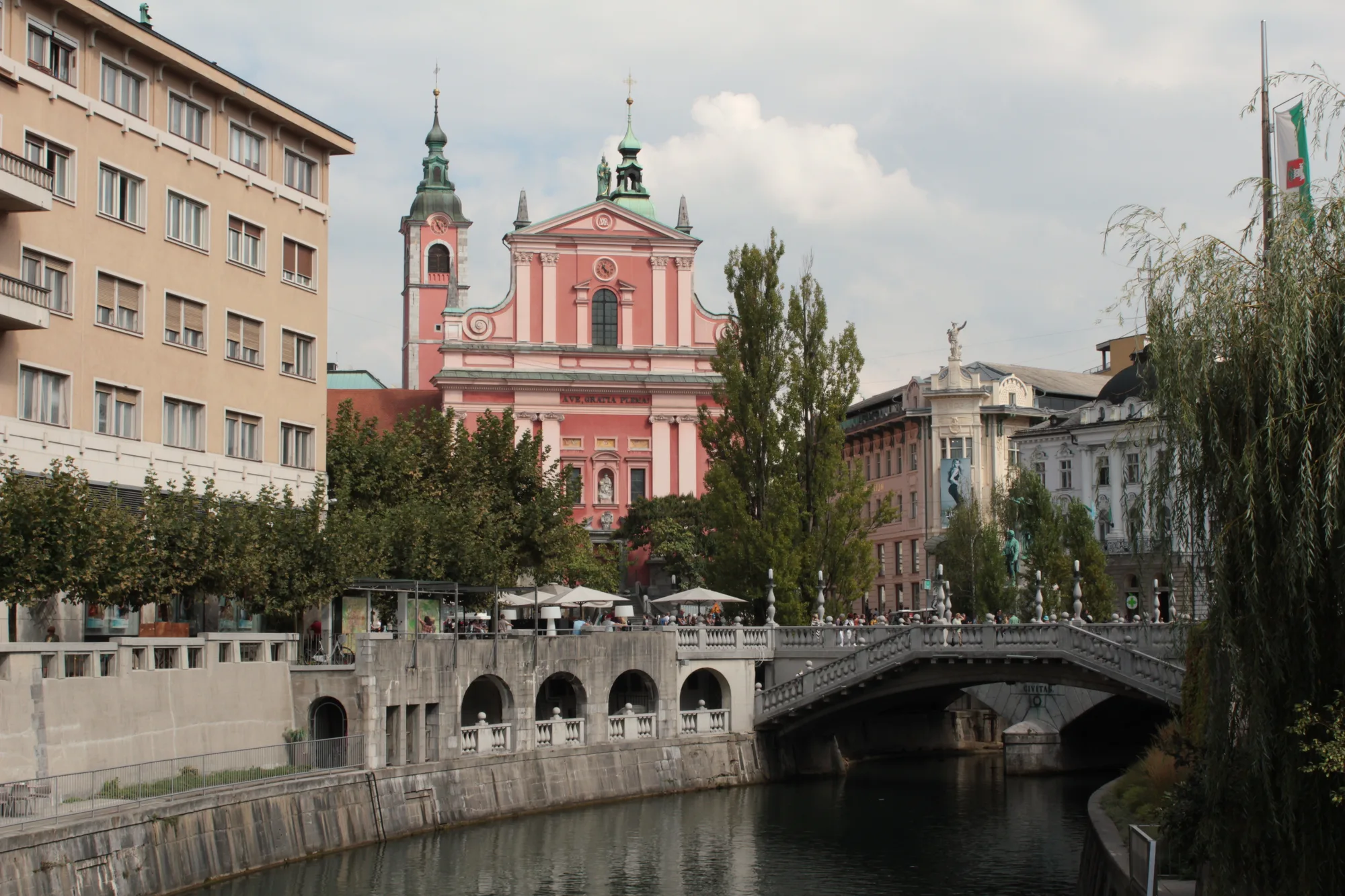
Ljubljana is a year-round walking city, but the experience shifts with the clock and the calendar. Early mornings are calm and beautifully lit, with empty bridges and reflections on the still river — the photographer’s window. Late afternoon into golden hour is the most atmospheric stretch, perfect for the riverside loops and the castle viewpoints, and it slides naturally into dinner. Midday in high summer is the busiest and hottest part of the day, so that’s when the shade of Tivoli, the cool of the market arcades, or a long café pause earns its place.
You don’t need special gear. Comfortable walking shoes handle every route here, including the castle climb and Rožnik; only after rain or snow do those forest and hill paths warrant a bit more care. Carry water in summer, a light layer for the evening river breeze, and not much else — the centre is small enough that you’re never far from a shop or a bench.
To dodge crowds, start early, lean into the quieter neighbourhood stretches south of the centre (Trnovo and Krakovo), or walk a segment of the PST ring trail that circles the city for a local, low-tourist feel.
Trnovo + Krakovo Neighbourhood Loop
Distance: ~3–4 km | Duration: 1–1.5 hours | Difficulty: Easy
Cross to the south bank near Cobbler’s Bridge and wander into Krakovo’s low houses and kitchen gardens, then on to Trnovo and its church and bridge. This is the most “local” stretch of central Ljubljana — quiet lanes, leafy corners, and a slower pace just a few minutes from the tourist core.
Highlights: Krakovo gardens, Trnovo Bridge, neighbourhood cafés, a calm river return toward the centre.
Official Quick Links (For Planning)
These official pages are useful if you want current details (openings, exhibitions, seasonal changes) before you walk.
Walking Routes FAQs
What’s the best walking route for first-time visitors?
The easiest first walk is the river + bridges loop: Prešeren Square → Triple Bridge → Central Market → Dragon Bridge → back via Old Town lanes.
Is Ljubljana good for walking?
Yes—Ljubljana’s center is compact, pedestrian-friendly, and designed for strolling. You can build great routes without needing transport.
What’s the best “nature walk” inside the city?
Tivoli Park is the classic green reset, and you can extend it toward Rožnik for a little forest air without leaving Ljubljana.
How do you avoid crowds on walks?
Start early in the morning, choose neighborhood stretches south of the center (Trnovo/Krakovo), or walk a segment of the PST ring trail for a quieter local feel.
Do you need hiking shoes for Castle Hill or Rožnik?
Not usually—comfortable walking shoes are enough for the common paths, especially in dry weather. After rain, paths can be slippery, so take it slower.
How walkable is Ljubljana, really?
Very. The centre is compact, flat, and largely pedestrianized, with the river acting as a built-in handrail through the city. Most visitors barely use transport at all — almost every highlight is within a 15–20 minute walk of Prešeren Square, and the only real climb is up to the castle.
What’s the best time of day for walking in Ljubljana?
Early morning is calm and photogenic, with quiet bridges and soft light. Late afternoon into golden hour is the most atmospheric, especially along the river and from the castle viewpoints. Midday in summer can be hot and busier, so that’s a good time to dip into Tivoli’s shade or the market arcades.
Can you combine several routes into one day?
Yes — the routes share anchors, so they link naturally. A classic full day is the Old Town + bridges loop in the morning, lunch at the market, Tivoli in the afternoon, then the castle for golden hour. Because distances are short, stitching two or three routes together rarely feels like a slog.
Are the walking routes suitable in winter or rain?
The riverside and Old Town loops work year-round; just expect slower, possibly slippery surfaces after rain or snow on the castle and Rožnik paths. In bad weather, lean on the covered market arcades, museum-quarter stops, and shorter river segments, and save the viewpoints for a clearer window.
Next reads Pair this page


