 Sights, Dining, Walkable
Old Town & Riverside Core
City Centre
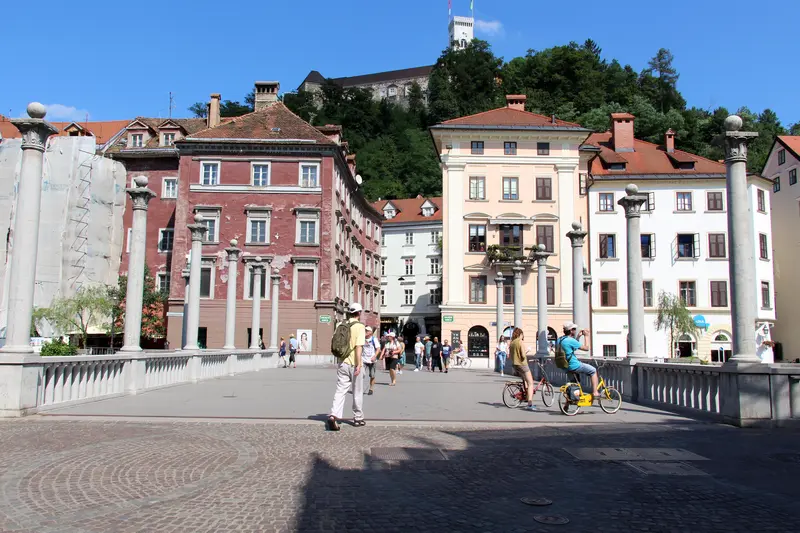
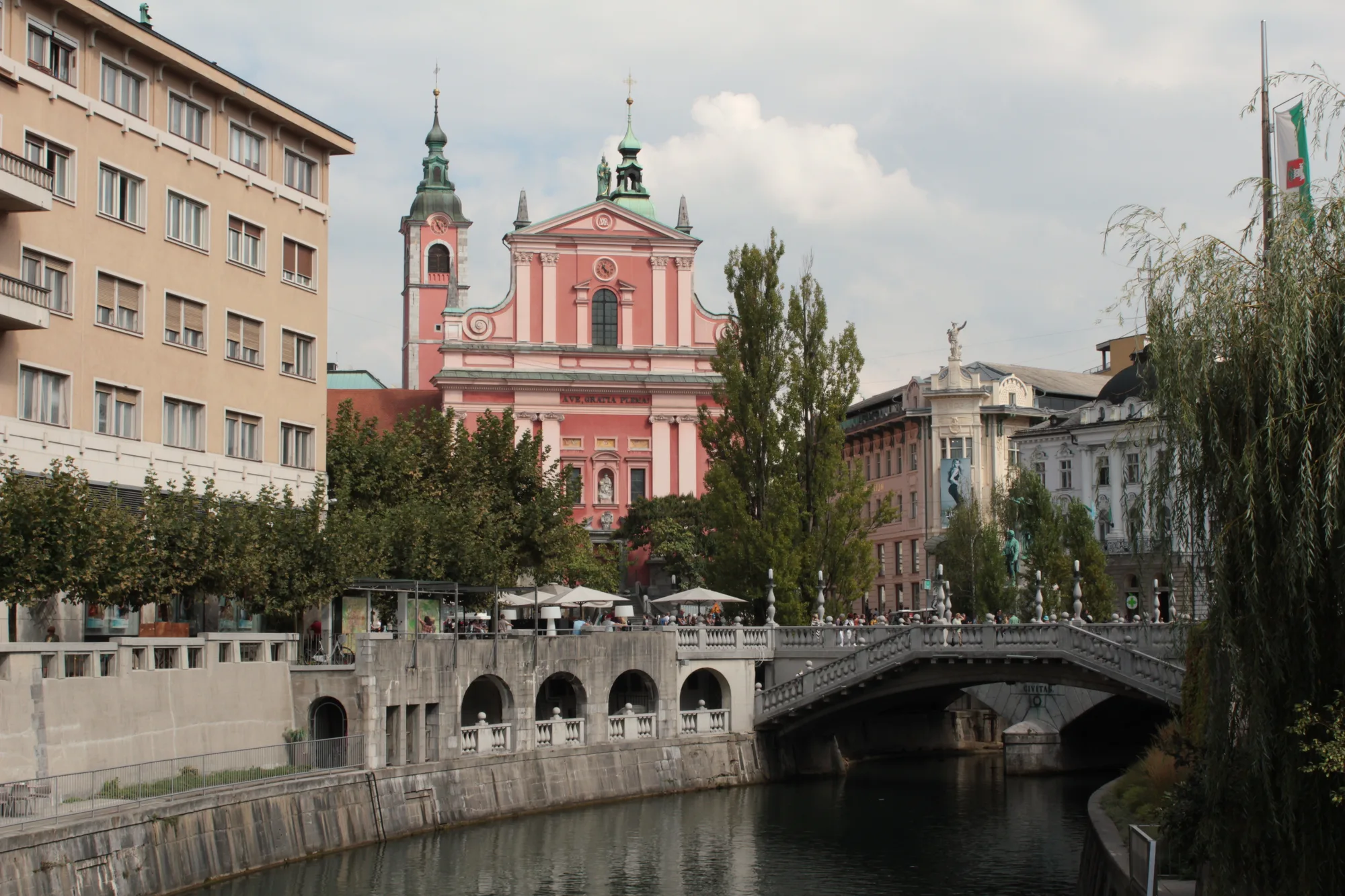
The heart of Ljubljana: bridges, riverside cafés, market arcades, and walkable streets where most first-time sightseeing happens without thinking about transport.

Love Ljubljana
Discover the city's diverse districts
Ljubljana is compact, but its neighborhoods feel distinct: the postcard riverside center, garden pockets like Krakovo, creative zones near Metelkova, and green residential districts where locals slow down.
These pins are practical “anchor points” to understand distances and decide where to stay.
Sights, Dining, WalkableCity Centre
The heart of Ljubljana: bridges, riverside cafés, market arcades, and walkable streets where most first-time sightseeing happens without thinking about transport.
 Local Calm, Easy Access
South of Centre
A calm, characterful district south of the center—close to parks and the river, with a slightly residential feel that still keeps you near everything.
Garden Lanes, QuietBetween Centre & Trnovo
A tiny pocket of gardens and low houses right next to the center. It’s an ideal “secret walk” neighborhood for a quiet morning loop.
 Green, Residential
Northwest
A broad, local-feeling area with parks and residential streets—great if you want space, greenery, and an easy commute into the center by bus or bike.
 Well-Connected, Local
North
A practical, well-connected district with a local pace—easy access to the center and several notable architectural sights (including Plečnik’s Žale).
Art, NightlifeNear Main Station
For creativity and nightlife: alternative culture, museums, and street-art energy. Great for travelers who want a sharper edge to balance Old Town charm.
Quiet, GreenWest / Southwest
Leafy and residential, close to green spaces and a quieter rhythm. A good option if you like morning walks and calm evenings.
Pond Walks, NatureNorthwest
Known for the peaceful pond and walking loop—excellent if you want a nature break without leaving the city.
Value, Local FeelSouthwest
A residential district with easy access to green spaces and straightforward transport into the center—often good value and pleasantly local.
When you’re choosing a neighborhood, it helps to anchor the map with a few real places. These official pages are useful for quick context.
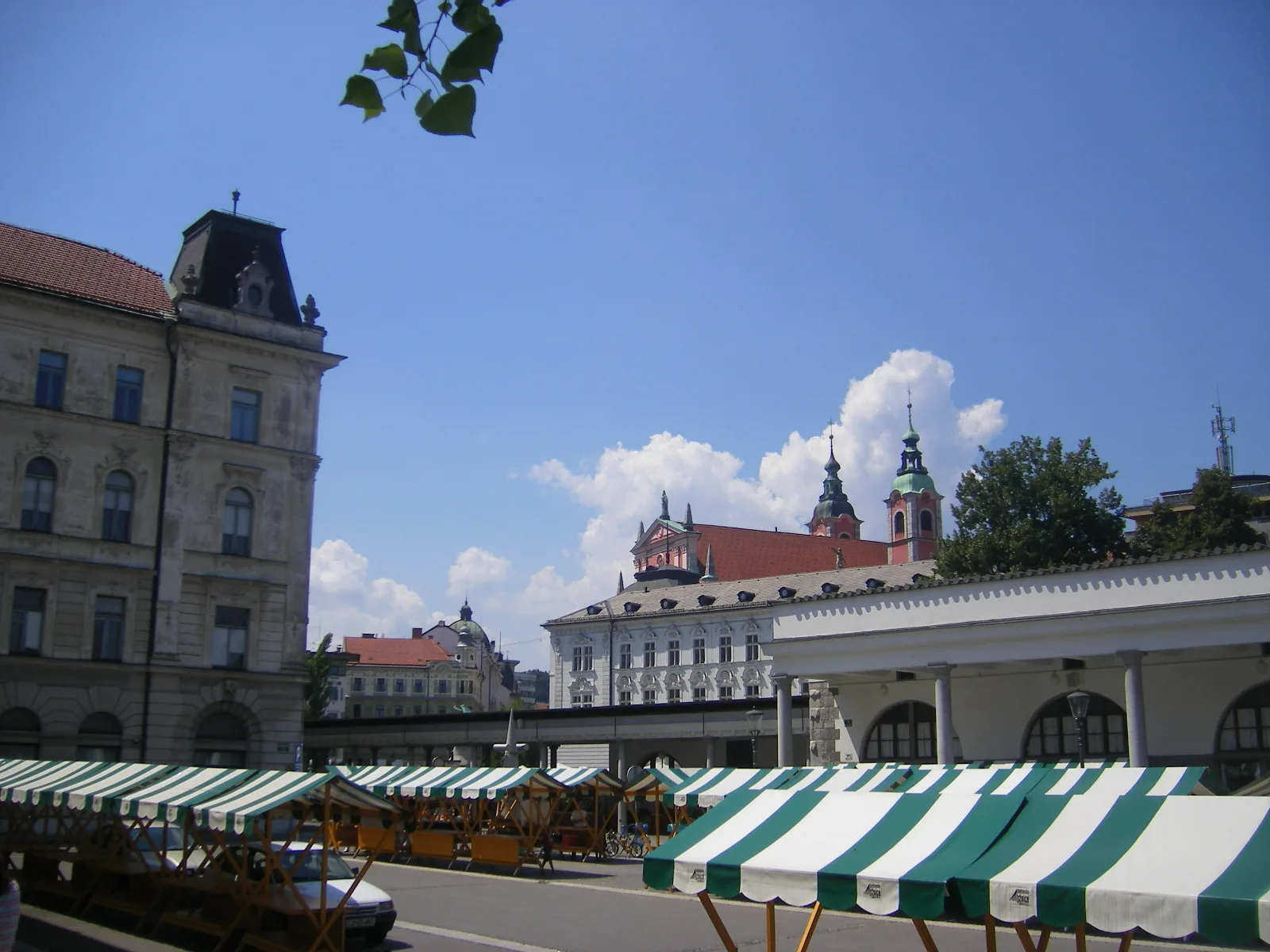
Old Town / Riverside core: Walk everywhere, see the sights, and never worry about logistics. It’s the most atmospheric choice, but often pricier.
Vič or Šiška: More space and often better prices, with easy bus or bike connections into the center.
Tabor / Metelkova: Close to museums, galleries, and alternative culture—excellent if you like art evenings and a more urban edge.
Metelkova area: For nightlife, street art, and creative energy—balanced with daytime museum visits nearby.
Picking a neighborhood in Ljubljana is less about getting it wrong and more about matching the city to the kind of trip you want. Because the inner city is so compact and so walkable, almost any central choice puts you within a comfortable stroll of the river, the bridges, Castle Hill, and the main squares. What actually changes from district to district is the texture of your days: how lively or hushed the evenings feel, how much greenery sits outside your door, how often you reach for a bus or a bike, and how much you pay for the privilege of stepping straight into the postcard.
A useful way to decide is to picture your typical day. If you want to drop your bags and immediately be among café terraces, market arcades, and riverside crowds, the Old Town and the riverside core are unbeatable—you trade a little extra cost and some night-time buzz for the convenience of walking everywhere. If your ideal morning starts with a quiet coffee and a slow walk past gardens before the city wakes up, the leafy southern pockets of Trnovo and Krakovo, or green residential districts like Rožna Dolina and Koseze, will suit you better. And if you are watching your budget or travelling for longer, the outer residential belts—Vič, Šiška, Bežigrad—often offer more space and gentler prices in exchange for a short bus or bike ride into the middle.
One more rule of thumb: in a city this small, you rarely need to optimise for being in the exact geographic center. A street a few minutes off the busiest strip frequently gives you the best of both worlds—quiet sleep and a two-minute walk back into the action. If you are still weighing it up, our companion guides to the best areas to stay and the Old Town go into more detail on specific streets and trade-offs, and the first-time visitor guide ties it all back to a sensible base for a short stay.
The single most useful thing to understand about Ljubljana is just how short the distances are. Take Prešeren Square—the unofficial heart of the city, beside the Triple Bridge—as your zero point, and almost everything you will want to reach is measured in minutes, not kilometres. The numbers below are approximate strolling times at an unhurried pace; treat them as a feel for the map rather than precise figures, and remember the pedestrianised center means you are rarely fighting traffic.
Because the river loops through the Old Town, the most scenic routes often double as the most direct ones—you can walk from Trnovo to the Dragon Bridge almost entirely along the water. If you would rather see the distances laid out as actual routes, our walking routes guide sketches a few easy loops, and the is Ljubljana walkable? page explains why you can plan most of a visit without ever touching public transport. For the practicalities of bikes, buses, and the free electric shuttles when you do venture further, see getting around Ljubljana.
Every neighborhood in Ljubljana sits somewhere on a spectrum between buzz and calm, and being honest with yourself about which end you prefer will do more for your trip than any other decision. The riverside core is the lively end: café terraces spill onto the embankments, street musicians play near the bridges, and on warm evenings the whole stretch from the Triple Bridge to the Cobblers’ Bridge hums with people. That energy is part of Ljubljana’s charm—but if your room overlooks the busiest section, you may hear it well past midnight.
The Tabor and Metelkova zone, near the station, is lively in a different register: this is where alternative culture, late venues, and street art concentrate, so it appeals to travellers who want a sharper, after-dark edge. At the quiet end you find the garden districts of Krakovo and Trnovo, the residential calm of Rožna Dolina, and the green stillness around Koseze Pond, where the loudest sound is often birdsong on a morning walk. Šiška, Vič, and Bežigrad fall into a comfortable middle—ordinary, lived-in neighborhoods with local shops and a steady, unflashy rhythm.
The good news is that the trade-off is gentle here. Because nothing is far apart, you do not have to sacrifice access to choose calm. Plenty of visitors stay a few minutes off the river—close enough to walk into the buzz whenever they want it, far enough to sleep in peace. If late nights and live atmosphere are the point of your trip, lean toward the river or the Metelkova area and read up on the best bars and Metelkova. If you are here to wind down, the southern garden lanes and the parks around Tivoli are where the city exhales.

Different trips reward different bases. Here is a quick orientation by who you are travelling as—use it as a starting point, then fine-tune by reading about the specific districts above.
Stay in or right beside the Old Town and riverside core. You will walk to the Triple Bridge, the Dragon Bridge, the Central Market, and the castle funicular without ever consulting a map app, and you will absorb the city’s atmosphere simply by stepping outside. It is the most atmospheric—and usually the most expensive—option, but for a first short visit the convenience is hard to beat. Pair it with our one day or weekend itineraries.
The riverside and the quieter edges of the Old Town are made for couples—romantic, walkable, and lined with terraces for a long evening drink. Choose a street just off the busiest strip and you get the candle-lit ambience without the late-night noise. The leafy lanes of Trnovo and Krakovo add a softer, more intimate feel if you would rather wake up among gardens than crowds.
Families tend to be happiest a short step out of the busiest core, with space to move and green relief close by. The area around Tivoli Park, the garden districts of Krakovo and Trnovo, and the calm loop at Koseze Pond all give children room to roam while keeping the center within an easy walk or bike ride. Quieter streets also mean earlier, easier bedtimes.
The outer residential belts—Vič, Šiška, and Bežigrad—generally offer more space and better value than the postcard center, and they are only a short bus or bike ride away. As long as your accommodation has a simple route to the middle, staying slightly out is one of the smartest ways to stretch a Ljubljana budget without feeling cut off.
The riverside delivers easy evening energy and a steady run of bars, while the Tabor and Metelkova district near the station is the city’s best-known zone for alternative, late-night, and creative venues. Basing yourself between the two keeps you within stumbling distance of both moods. See our best bars guide to plan an evening.
If you are staying a week or more and want everyday Ljubljana, the residential districts repay you: Šiška and Koseze for parks and local shops, Bežigrad for an unfussy northern rhythm, and Trnovo or Rožna Dolina for green calm within walking distance of the center. You will live more like a local and pay less for the privilege, with plenty of cafés to settle into.
The Old Town is where visitors gather, but it is not really where the city sleeps. Most of Ljubljana’s residents live in the surrounding belt of neighborhoods that ring the historic core, and getting a sense of them helps you understand the city beyond its most photographed corners. To the northwest, Šiška is one of the larger residential districts—busy but unpretentious, with good park access and the peaceful Koseze Pond loop on its edge. Bežigrad, to the north, has its own steady local pace and is home to one of the city’s great architectural set-pieces, Plečnik’s Žale cemetery complex.
South and west of the center, the picture turns greener. Trnovo and Krakovo are beloved garden districts, full of low houses, allotment plots, and quiet lanes that feel almost village-like despite being minutes from the river. Rožna Dolina continues that leafy, residential character further west, while Vič, to the southwest, is a practical, well-connected area that many families call home. None of these are tourist destinations in the conventional sense, which is precisely their appeal: staying among them, even for a few nights, lets you experience the unhurried, walkable, deeply liveable city that won Ljubljana its European Green Capital reputation.
If you want to dip into local life without committing to it as your base, it is easy to do on foot. Wander south into Krakovo’s gardens on a quiet morning, follow the river out to the leafy edges, or ride a BicikeLJ shared bike out to Koseze Pond for a loop among joggers and families. These small detours, more than any single sight, are where you feel the difference between visiting Ljubljana and briefly belonging to it.
Once you have chosen a base, moving between Ljubljana’s neighborhoods is refreshingly simple, and for most of them walking is genuinely the fastest and most enjoyable option. The central districts—Old Town, Trnovo, Krakovo, and the Tabor area near the station—form a tight cluster you can cross on foot in well under half an hour, usually with the river as your guide. Because the heart of the city is pedestrianised and car-free, you spend that time among café terraces and bridges rather than at traffic lights.
For the outer residential belts—Šiška, Vič, Bežigrad, and Koseze—a little help is handy. The city’s LPP buses, paid for with the contactless Urbana card, connect these districts to the center frequently and cheaply, and they are the easiest choice on a rainy day or with tired legs. A BicikeLJ shared bike is often quicker still for medium hops, and the network of stations means you can usually pick one up and drop it near where you are going. Within the pedestrianised core itself, the free little Kavalir electric shuttles will give you a lift between points where cars cannot go.
The practical upshot is that you can mix and match: walk the central districts by default, hop a bus or bike to the greener edges when the mood strikes, and never feel that your choice of neighborhood has trapped you on one side of the city. For the full breakdown of tickets, bike share, parking, and transfers, our getting around guide covers every mode in detail, and the bus tickets and Urbana page explains exactly how to tap and ride.
Old Town and the riverside core are the easiest base for first-timers because you can walk to bridges, restaurants, cafés, and Castle Hill without thinking about transport.
Couples often like the riverside and the edges of Old Town: it’s romantic and walkable, but can be quieter at night if you choose a street just off the busiest strip.
Trnovo and Krakovo feel local and leafy while still being close to the center. Šiška is also popular for a residential vibe and quick access to Tivoli and parks.
The riverside has plenty of evening energy, and the Metelkova/Tabor area is the best-known zone for alternative nightlife and late-night venues.
No—Ljubljana is walkable and has buses and city bikes. Staying a little outside the core can be great value as long as you have a simple route to the center.
Ljubljana is compact, so distances feel small. From Prešeren Square in the center, Trnovo and Krakovo are roughly a 10–15 minute walk south, the main train and bus stations are about 15–20 minutes north, Tivoli Park starts around 10–15 minutes northwest, and outer residential districts like Šiška, Vič, and Bežigrad are short bus or bike rides rather than long journeys. You can cross most of the inner city on foot in under half an hour.
Families often do well a short step out of the busiest riverside strip—around Tivoli Park, or in green residential pockets like Krakovo, Trnovo, or Koseze where there is space to walk and easy access to parks and ponds. You still reach the center quickly on foot or by bike, but you swap late-night noise for calmer streets and quieter mornings.
It can be, especially if you plan day trips by train or bus, or if you are arriving and leaving with luggage. The station area (close to Tabor and Metelkova) is well connected and walkable to the center, though it feels more workaday than the postcard riverside. Pick a quieter side street if you want both convenience and calm.
Most residents live outside the tourist core, in districts like Šiška and Koseze to the northwest, Bežigrad to the north, Vič to the southwest, and the leafy lanes of Trnovo, Krakovo, and Rožna Dolina just south and west of the center. The Old Town is busiest with visitors; the surrounding neighborhoods are where everyday Ljubljana happens.
You can comfortably walk between the central districts—Old Town, Trnovo, Krakovo, and Tabor are all within easy reach of each other. For the outer residential areas (Šiška, Vič, Bežigrad, Koseze) a city bus, a BicikeLJ shared bike, or a short ride is more practical, though even those are not far. The pedestrianised core also has the free Kavalir electric shuttles for short hops.
Next reads Pair this page