Why Tivoli Matters
Ljubljana is a capital that feels green, and Tivoli Park is one of the main reasons. It’s close enough to the center to visit casually, but spacious enough to feel like a real escape.
Tivoli works especially well as a “balance” day: after bridges and cafés, you reset with trees, paths, and a calmer pace.
Map: Tivoli Park Highlights
This map covers the “easy wins” inside Tivoli: the promenade, castle, and a simple loop you can do in any season.
A Park With Real Pedigree
Tivoli is Ljubljana’s largest and most-loved park, laid out just north-west of the city centre and stretching up into the wooded slopes of Rožnik. It dates back to the 19th century, when several earlier gardens and estates were combined into a single landscaped park, and it has been the city’s green heart ever since. What makes it special isn’t a single attraction so much as the scale and variety: formal promenades, ornamental gardens, ponds, sports facilities, forest paths, and quiet corners all within easy reach of the centre.
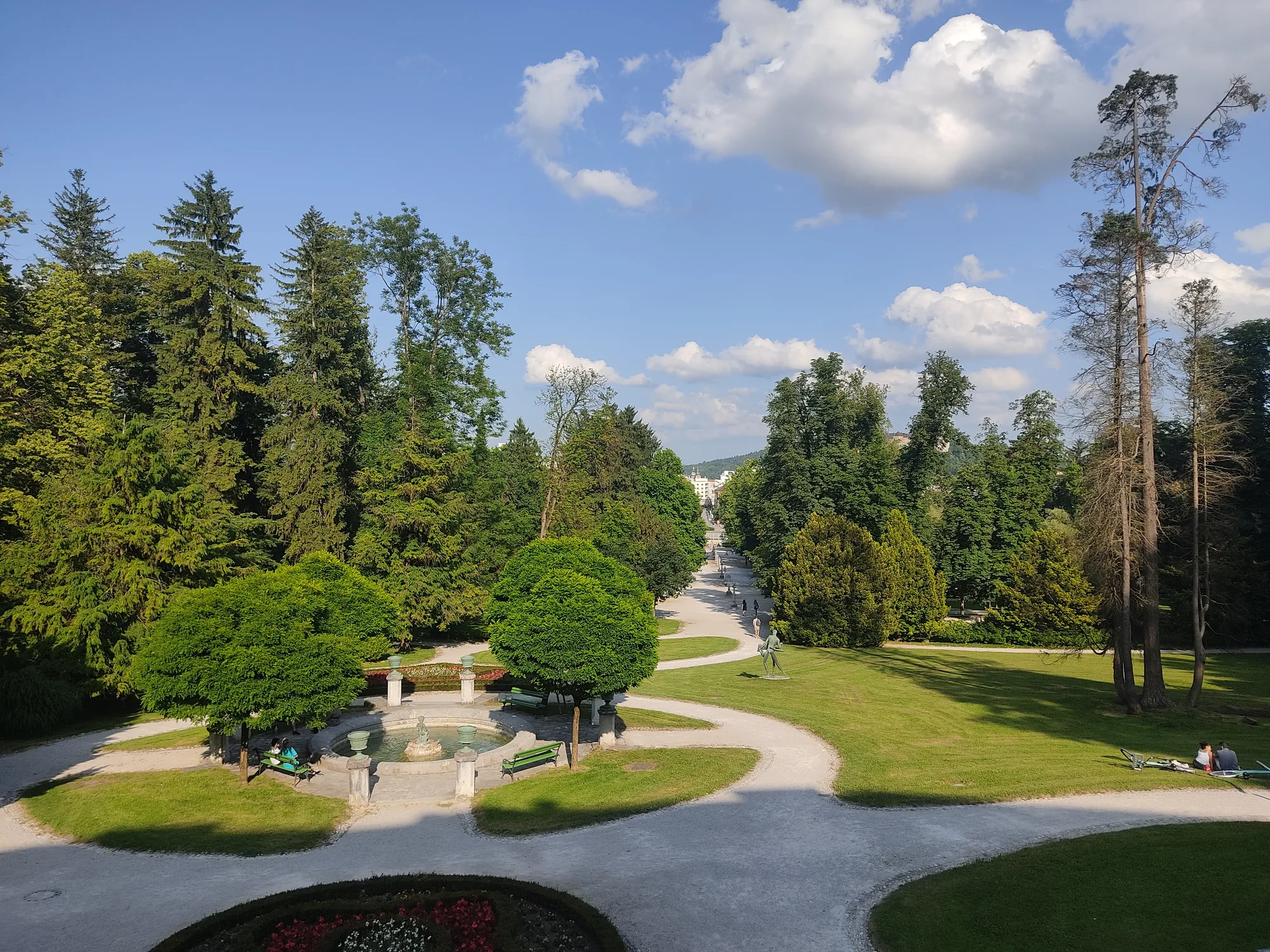
The park’s signature feature, the Jakopič Promenade, was designed by Jože Plečnik in the 1920s and 30s — the same architect behind the Triple Bridge and the river embankments. It’s a broad, tree-lined central axis with elegant lamps and balustrades, and it tied the park visually back into Plečnik’s wider vision for the city. That heritage is part of why a walk here feels more composed and intentional than a typical urban green space.
Crucially, Tivoli is genuinely central. From the Old Town or Congress Square it’s only a short walk, often via an underpass beneath the main road that delivers you straight onto the promenade. That proximity is the whole appeal: you can swap the bustle of the riverside for trees and birdsong in a matter of minutes, then be back among the cafés just as quickly.
What You’ll See (The Good Stuff)
Jakopič Promenade
Tivoli’s central promenade often hosts open-air photo exhibitions, making the walk feel like a gallery you move through at your own pace. It’s one of the easiest “culture + nature” combos in the city.
Jakopič Promenade info ↗Tivoli Mansion + MGLC
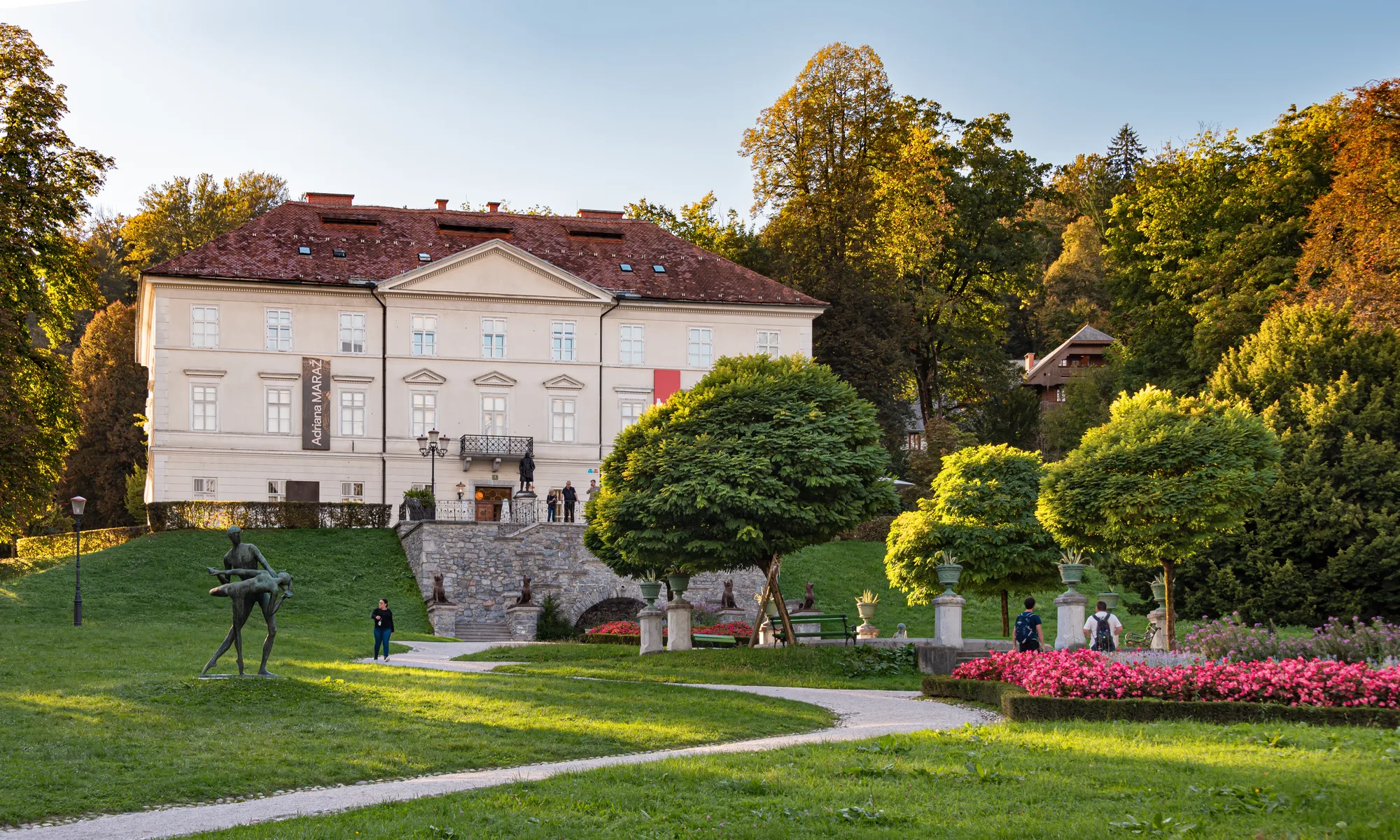
Inside the park, the International Centre of Graphic Arts (MGLC) adds a “museum stop” without breaking your green day. Great for rainy afternoons or anyone who likes design and printmaking.
MGLC official site ↗Simple “Reset” Moments
Tivoli is best when you stop trying to optimize: sit on a bench, read, wander a side path, and let the city go quiet for an hour. It’s the perfect counterweight to Old Town crowds.
What to Do
- • Walk the main promenade and explore side paths
- • Pair it with a gentle Rožnik walk for a “mini hike” feel
- • Bring a book or a picnic and let the afternoon slow down
- • Use Tivoli as your “reset” between sightseeing and dinner plans
Easy Routes
1) Quick Park Loop (45–60 min)
Enter from the center, do a relaxed loop through the main paths, then return for coffee or lunch.
2) Tivoli → Rožnik (1.5–3 hrs)
Add a gentle climb toward Rožnik for forest air, then return via a different path for variety.
A Simple Half‑Day Pairing
Option A: Park → River. Do Tivoli first (morning light), then walk back into the center for riverside lunch.
Option B: River → Park. Start with Old Town, then go to Tivoli in late afternoon as a reset before dinner.

Official Links (Current Exhibitions, Info)
For the latest exhibition program and visitor info, use these official pages.
Tivoli Through the Seasons
One of Tivoli’s quiet strengths is that it’s good all year. In spring, the flowering trees and fresh greenery make the promenade especially photogenic, and the park fills with locals shaking off winter. Summer brings deep shade under mature trees, which makes it a welcome cool-down from the sun-baked squares of the centre — ideal for a picnic of market finds from the Central Market.
Autumn is arguably the park at its most cinematic, when the avenues turn gold and rust. And winter has a stark, peaceful beauty: bare trees, low light, and few people about. Whatever the season, the main paths are wide and easy, while the unpaved side trails toward Rožnik can get muddy after rain — so pack sensible shoes if you plan to wander off the promenade.
Because it changes so much across the year, Tivoli is the kind of place worth returning to on a longer stay. A morning visit feels different from a golden-hour stroll, and a crisp winter walk has little in common with a lazy summer afternoon on the grass. It rarely feels the same twice.
Tivoli Park FAQs
How far is Tivoli Park from Ljubljana Old Town?
Tivoli Park sits right next to the center. From the Old Town core, it’s a short walk—easy to add as a “reset” between sightseeing and dinner.
What should you not miss in Tivoli Park?
Don’t miss the Jakopič Promenade (often with open-air exhibitions) and the Tivoli Castle area. If you want culture without leaving the park, add an MGLC stop.
How long should you spend in Tivoli Park?
A quick loop can take 45–60 minutes. A relaxed half-day (with café breaks and side paths) is ideal, and you can extend toward Rožnik for a longer walk.
Is Tivoli Park good for families and casual walks?
Yes—Tivoli is one of the easiest “everyone-friendly” plans in Ljubljana: wide paths, green space, and plenty of places to pause.
What’s the best time of day to visit Tivoli Park?
Mornings are quieter, and late afternoon works perfectly as a reset before dinner. In spring and autumn, the park is especially scenic.
Is Tivoli Park free and always open?
Yes—Tivoli is a public park, free to enter and open around the clock. You only pay for ticketed things inside it, such as MGLC exhibitions in Tivoli Castle. The paths are well-lit on the main promenade, though as anywhere, the quieter forest edges are best enjoyed in daylight.
Who designed the Jakopič Promenade?
The grand central promenade was designed by Jože Plečnik, the architect who shaped much of 20th-century Ljubljana. It’s a wide, tree-lined axis lined with lamps and balustrades, and today it doubles as an open-air gallery, often hosting large-format outdoor photography exhibitions.
Can you walk from Tivoli up to Rožnik hill?
Yes—Tivoli connects directly into the wooded slopes of Rožnik and the wider Tivoli–Rožnik–Šiška landscape park. A gentle climb of 30–45 minutes takes you to the Rožnik summit area, a classic local walk that turns a flat park stroll into a light “mini-hike.”
Is Tivoli Park good in winter?
It’s a year-round park. Spring and autumn are the most photogenic, summer is lush and shady, and winter has its own quiet appeal—bare trees, crisp light, and far fewer people. Wear proper shoes after rain or snow, as the unpaved side paths can get muddy.
Best Time to Go
- • Morning: quieter paths and fresh light
- • Late afternoon: best “reset” before dinner
- • Spring/Fall: the park feels at its most cinematic
Next reads Pair this page