Why Go
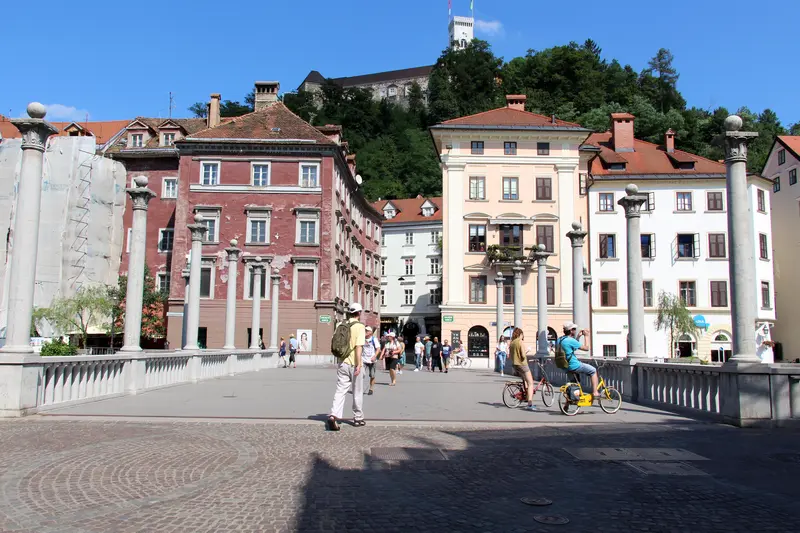
If you do only one “viewpoint” in Ljubljana, make it the castle. It’s close, it’s iconic, and it gives you instant orientation: the river loop, the Old Town core, and how compact the city really is. From Castle Hill you can trace your whole trip in a single glance — Prešeren Square and the Triple Bridge below, the green band of Tivoli Park to the northwest, and on a clear day the Kamnik Alps and even Triglav, Slovenia’s highest peak, on the horizon. That orientation is exactly why it works so well as a first-morning or first-evening stop.
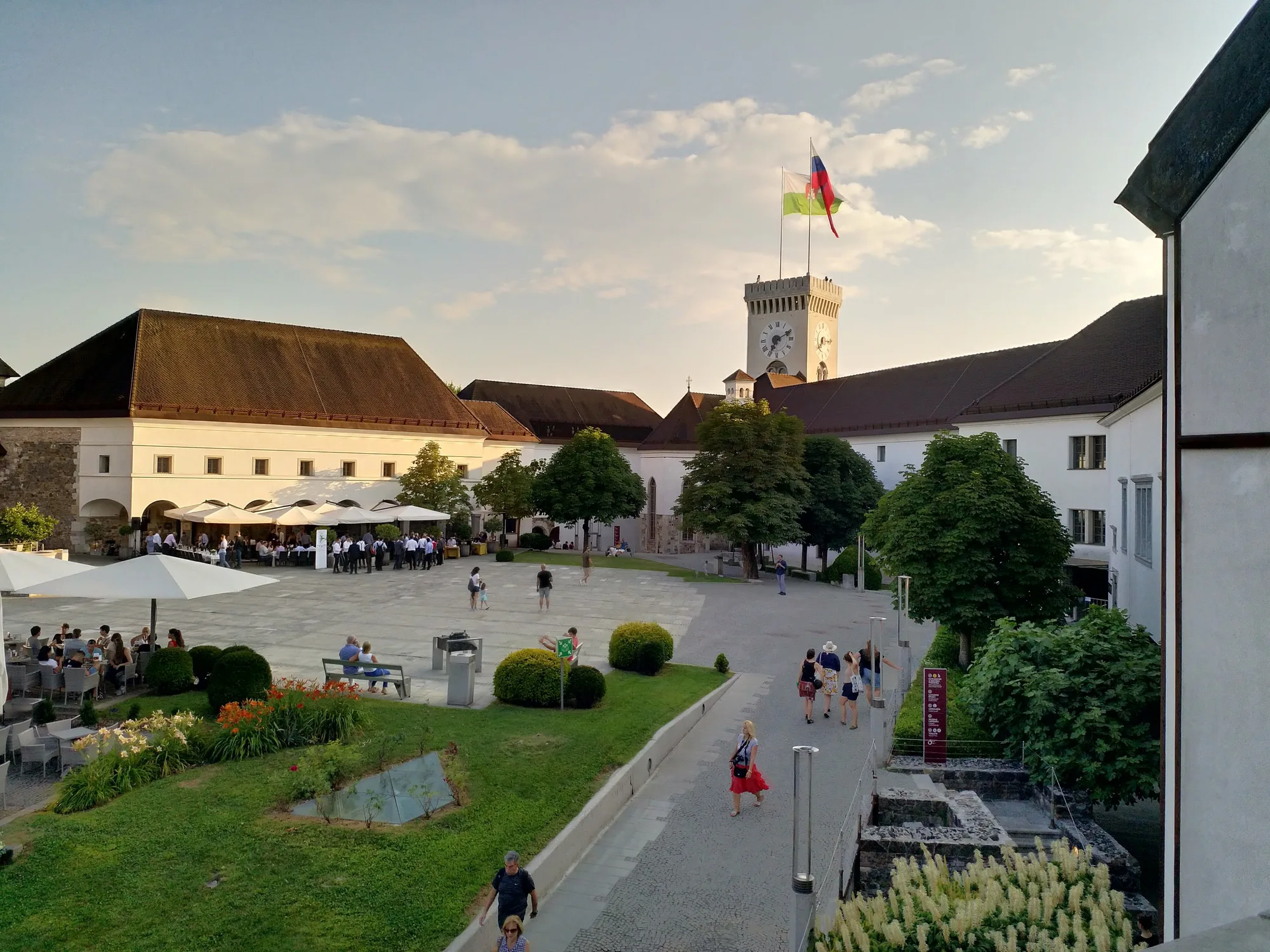
The castle isn’t a single building so much as a hilltop complex that grew over roughly nine centuries. A fortification has stood here since at least the 11th century; most of what you walk through today is late medieval and later, heavily restored through the 20th century after long use as everything from a garrison to a prison. That layered history is part of the appeal: you’re not visiting a polished theme-park castle, but a working civic landmark that still hosts concerts, weddings, exhibitions, and the city’s New Year celebrations.
The best strategy is simple: go late afternoon, stay through golden hour, then walk down into the center for dinner. The grounds and the main courtyard are free to enter, so even if you skip the ticketed attractions you still get the views, the atmosphere, and one of the easiest wins in the whole city.
What You Pay For (and What’s Free)
This trips up a lot of first-time visitors, so it’s worth being clear. The castle grounds, ramparts, and the central courtyard are free — you can walk up, wander, take in the courtyard views, and leave without paying anything. What costs money is the ticketed attractions (the Watchtower with its 360° viewing platform, the Chapel of St George, the Slovenian History exhibition, the Puppetry Museum, and the time-travel “Escape Castle” experiences) and the funicular if you ride rather than walk.
The full adult castle ticket is €15, the funicular €6 return, and a combined ticket bundling both is €19. Children, students, seniors, and families get reduced rates, and a Ljubljana Card includes castle entry and the funicular — worth doing the maths on if you’re visiting several paid sights. Admission prices and seasonal opening hours do drift over time, so it is worth a quick check against the official price list when you plan.
Practical rule of thumb: if you mainly came for the view and the atmosphere, the free grounds are genuinely enough. If you want the highest panorama (the Watchtower), the historical context, or you’re travelling with kids who’d enjoy the puppetry collection, the full ticket is the better value.
Map: Castle + Funicular
The castle sits right above Old Town—close enough to feel effortless, high enough to change your whole view of the city.
Official Links
For tickets, exhibitions, and the latest operating details, use these official pages.
How to Get Up
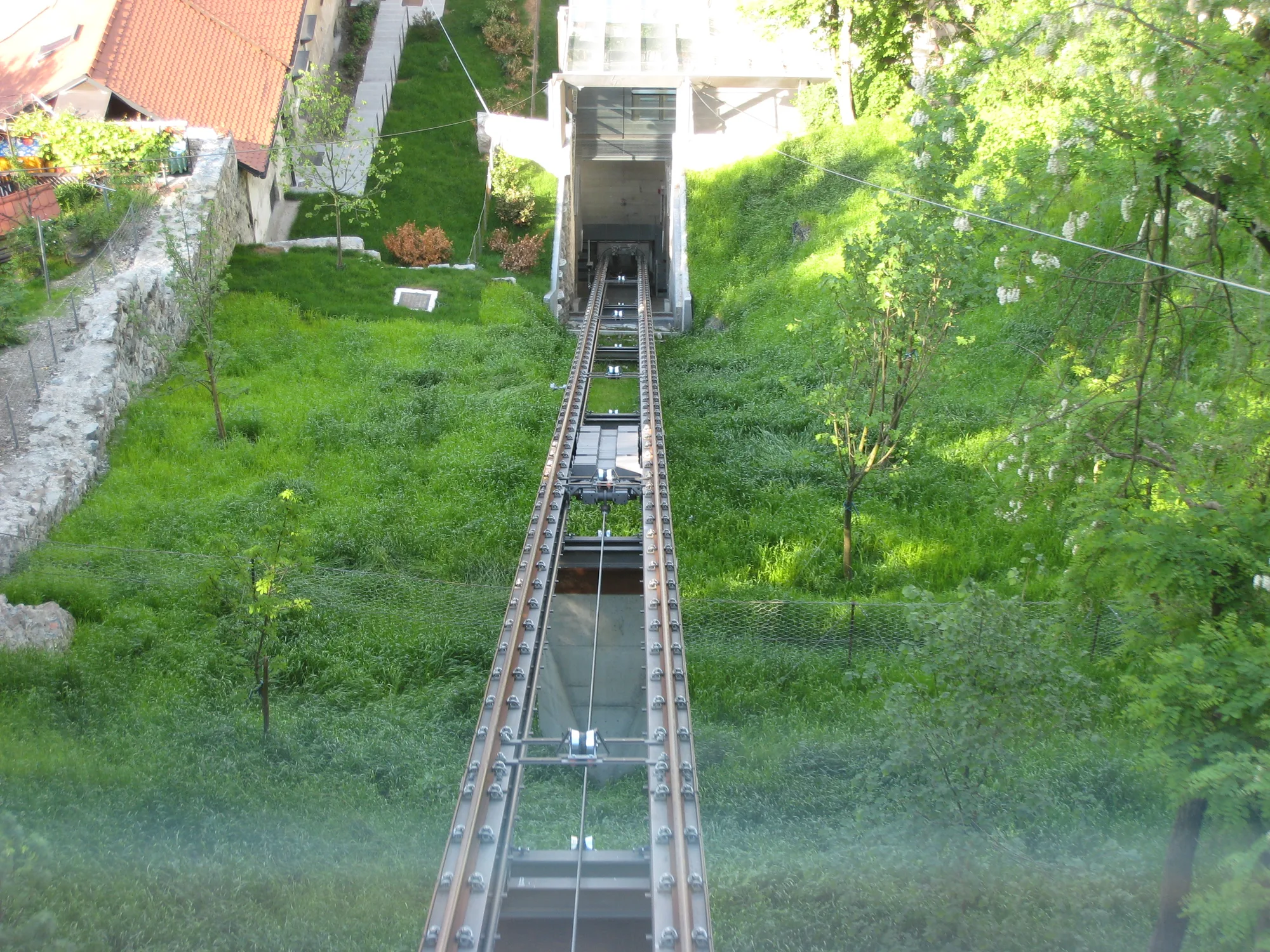
Option 1: Funicular. Fast, easy, and great if you’re short on time — or if you want to save your energy for walking the city afterward. The lower station is on Krekov trg, a two-minute walk from the Central Market, and the ride to the top takes barely a minute. This is the obvious choice if you’re visiting with small children, a stroller, limited mobility, or in the heat of summer.
Option 2: Walk. A short, mostly shaded climb of roughly 10–15 minutes from the Old Town, with several path options. The most direct routes go up from Študentovska ulica or Reber, while gentler, more scenic forest paths wind up from around Gornji trg and the southern side of the hill. None of them are long, but they are genuinely uphill, so wear comfortable shoes.
Option 3: Tourist train. In the warmer months a small road train runs up from the city centre, which is a useful middle ground if the funicular queue is long or you want a seated ride without the walk.
Pro move: Ride up, walk down. You get the view without doubling the climb, and the descent drops you straight back into the bars and restaurants of the Old Town — perfect timing if you’ve stayed for sunset.
Best Time to Visit
For the view, late afternoon into golden hour is unbeatable — the light softens, the red rooftops of the Old Town glow, and you can drift down into the centre for dinner afterwards. If you specifically want the Watchtower or exhibitions to yourself, arrive close to opening in the morning instead; the hill is quietest before the mid-morning tour groups and the lunchtime crowds build.
Season matters too. In summer (May–Sep) the castle stays open 9am to 8pm and the funicular runs to 10pm; the rest of the year the castle closes at 6pm and the funicular at 7pm, so plan an earlier descent in winter. The castle is genuinely a year-round visit — it’s open every day of the year — and a crisp, clear winter afternoon often delivers sharper alpine views than a hazy summer one.
Avoid planning a tight visit around a private event: the castle regularly hosts weddings, concerts, and festivals, and parts of the complex can be closed off. If your dates are fixed, a quick look at the official events calendar saves disappointment.
What to Do at the Castle
- • Climb the Watchtower for the highest 360° view in the city — the single best panorama Ljubljana offers
- • Walk the ramparts and outer walls and take in the skyline from multiple angles
- • Step into the small Chapel of St George, decorated with the coats of arms of the provincial dukes
- • See the Slovenian History exhibition for fast context on the country and the city
- • Visit the Museum of Puppetry — genuinely good with kids, and tied to Ljubljana’s puppet-theatre tradition
- • Explore the courtyard and small details (this is the “slow” part)
- • Add an exhibition, concert, or seasonal event if something aligns with your dates
- • Stay into the evening, then walk down into Old Town for dinner
If you only have an hour, prioritise the Watchtower and a slow loop of the ramparts. With two hours or more, add the Chapel, the history exhibition, and a coffee or glass of wine in the courtyard café before you head down — the castle has restaurants and a café if you want to linger rather than rush.
Practical Tips
- • Wear proper shoes. Even if you take the funicular, the courtyard, ramparts, and tower stairs involve uneven cobbles and steps.
- • Combine it with the Central Market. The funicular’s lower station sits right by the market and Dragon Bridge, so it’s easy to bundle them into one loop.
- • Check for closures. Private events occasionally close parts of the complex; the official site lists what’s on.
- • Do the maths on a Ljubljana Card. It bundles the castle, funicular, and other sights and can pay for itself quickly on a busy day.
- • Time golden hour. In summer that’s well into the evening; in winter it can be mid-afternoon, so plan your descent and dinner around it.
Best Viewpoints & Photography
The headline view is from the Watchtower, the glass-topped tower on the ramparts: a true 360° sweep that takes in the Old Town rooftops, the Ljubljanica’s loop, Tivoli’s greenery, and the Alps beyond. It’s the one ticketed view worth paying for. But you don’t have to climb the tower to get a great shot — the outer ramparts and the terrace on the city-facing side give you the classic postcard angle over the red roofs and the river for free.
For photographers, the light does most of the work. Golden hour rakes warm light across the Old Town and is the most flattering time for the rooftop panorama, while blue hour just after sunset is magic if you want the city lights coming on with the sky still deep blue. Mornings are clearer and far less crowded, which helps if you want clean shots without other visitors in the frame. In winter, cold, dry days deliver the sharpest mountain backdrops.
Don’t overlook the courtyard itself: the mix of old stone, the chapel’s heraldry, and the modern glass-and-steel additions make for strong detail shots, and the view back up at the castle from the funicular and the streets below is worth a frame or two on the way.
A Little History
People have fortified this hill for a very long time. Archaeology points to settlement here in antiquity, and a castle is documented from the medieval period, when the hill guarded the Carniolan provincial seat. For centuries it served the Habsburg administration; over time it slid down the social ladder, doing duty as a military barracks, an arsenal, a hospital, and — for a long, grim stretch — a prison. By the 19th and early 20th centuries much of the complex was run-down and overcrowded with poorer residents.
The castle you see today is largely the product of a sustained 20th-century restoration that turned a neglected fortress back into a civic showpiece. The funicular, opened in the 2000s, made the hill genuinely accessible to everyone, and the city now uses the castle as a cultural venue — concerts, open-air cinema in summer, weddings, exhibitions, and the focal point of Ljubljana’s New Year’s Eve celebrations. Knowing that backstory makes the place read differently: the patchwork of medieval walls, baroque tweaks, and modern glass interventions isn’t a mistake, it’s the visible record of a thousand years of reuse.
The dragon — Ljubljana’s civic symbol, most famously cast on the nearby Dragon Bridge — ties into the city’s founding legend of Jason and the Argonauts, and you’ll see it echoed all over town. The castle hill is the high point from which that whole compact, dragon-themed city makes sense.
Eating, Drinking & Lingering
One of the underrated reasons to go up late is that you don’t have to rush back down to enjoy the place. The castle complex has a café in the courtyard for a coffee or a glass of local wine with a view, and a couple of more substantial dining options if you want to make an occasion of it. Tables with the best outlook get booked up — especially around sunset and for special events — so if a castle dinner is the plan, reserve ahead rather than turning up and hoping.
If you’d rather keep things simple, treat the castle as the scenic first half of the evening and the Old Town as the second. Stay through golden hour with a drink on the ramparts, then walk down for dinner along the river, where the terraces by the Triple Bridge and the Cobblers’ Bridge fill up with the same warm evening light you just watched from above. That sequence — view first, food after — is how a lot of locals show off the city to visiting friends.
Whatever you choose, give yourself a buffer: the descent on foot takes ten minutes or so, the last funicular of the day runs earlier than you might expect outside summer, and the walk back down is far nicer when you’re not hurrying to catch it.
How It Fits Into Your Trip
Because the castle gives you instant orientation, it works best either first thing — to get the lay of the land before you explore — or last thing in the day, as a sunset finale before dinner. On a one-day visit, most people slot it into the late afternoon: stroll the Old Town and the river in daylight, ride up for golden hour, then walk down to eat. On a longer stay, you can split it: a quick free visit for the view early on, and a separate return for the Watchtower and exhibitions when you have more time.
It pairs naturally with the sights clustered at the foot of the hill — the Central Market, Dragon Bridge, the Cathedral, and the riverside Triple Bridge are all within a few minutes’ walk of the funicular’s lower station, so you can build a single, efficient loop that takes in the city’s greatest hits before or after you go up.
Ljubljana Castle FAQs
How do you get to Ljubljana Castle?
The easiest options are the funicular from the Old Town or a short walk up via streets and forest paths. A classic strategy is funicular up and a scenic walk down.
Where is the castle funicular station?
The lower station is in the Old Town area at Krekov trg, a short walk from the Central Market. The funicular runs daily — roughly 9am to 10pm in summer (May–Sep) and 9am to 7pm the rest of the year — though it is worth confirming the day’s last departure with the official page outside the high season.
When is the best time to visit?
Late afternoon is ideal: you get soft light for photos, can catch golden hour from the viewpoints, and then walk down into the center for dinner.
How long do you need at Ljubljana Castle?
Plan about 60–120 minutes for viewpoints and a relaxed look around. Stay longer if you visit exhibitions or time your visit with an event.
Is Ljubljana Castle worth it if you only have one day?
Yes—this is the fastest way to get your bearings. The views show you the river loop, Old Town, and how compact the city is.
Is it free to visit Ljubljana Castle?
The grounds, courtyard, and ramparts are free to walk, so you can enjoy the views and atmosphere at no cost. You only pay for the funicular and the ticketed attractions—the Watchtower viewing platform, the chapel, the Slovenian History exhibition, the Puppetry Museum, and the time-travel experiences. The adult castle ticket is €15, the funicular €6 return, and a combined ticket €19; it is worth a quick look at the official price list in case rates have shifted.
Do you need to book Ljubljana Castle tickets in advance?
For a normal self-guided visit you can usually buy on the spot at the funicular station or the castle. Advance booking matters mainly for guided experiences, the Escape Castle rooms, and special events, which can sell out. A Ljubljana Card includes castle entry and the funicular if you prefer not to buy separately.
Is Ljubljana Castle accessible by funicular for strollers and wheelchairs?
The funicular is the step-free way up and is suitable for strollers and wheelchair users. Note that the medieval complex itself has cobbles, steps, and some areas (like the Watchtower) that involve stairs, so not every part of the castle is fully step-free once you are at the top.
Next reads Pair this page