
A City Built for Walking
Ljubljana’s Old Town is compact, lively, and easy to love. The river is your compass: bridges connect little squares and lanes, and you’re never far from a café terrace or a view of Castle Hill.
What makes the center special isn’t just medieval texture—it’s human scale. The city feels designed for people, with river promenades, market arcades, and architecture that rewards looking closely.
Map: Old Town Anchors
Use this map to build a simple loop: Prešeren Square → bridges → market → cathedral → Town Square → back to the river.
The Riverfront Rhythm
Ljubljana’s Old Town revolves around the Ljubljanica: morning market routines, afternoon coffee, and evening dinners that stretch late. Walk both sides of the river and cross as many bridges as you can—you’ll find a different angle every time.
The most iconic node is Prešeren Square + the Triple Bridge area, but the best experience is the continuous loop: bridge → river promenade → side street → small square → repeat.
Don’t Miss These Areas
- • Prešeren Square: The “front door” to Old Town and an easy meeting point
- • Central Market area: Food culture + riverside colonnades and arcades
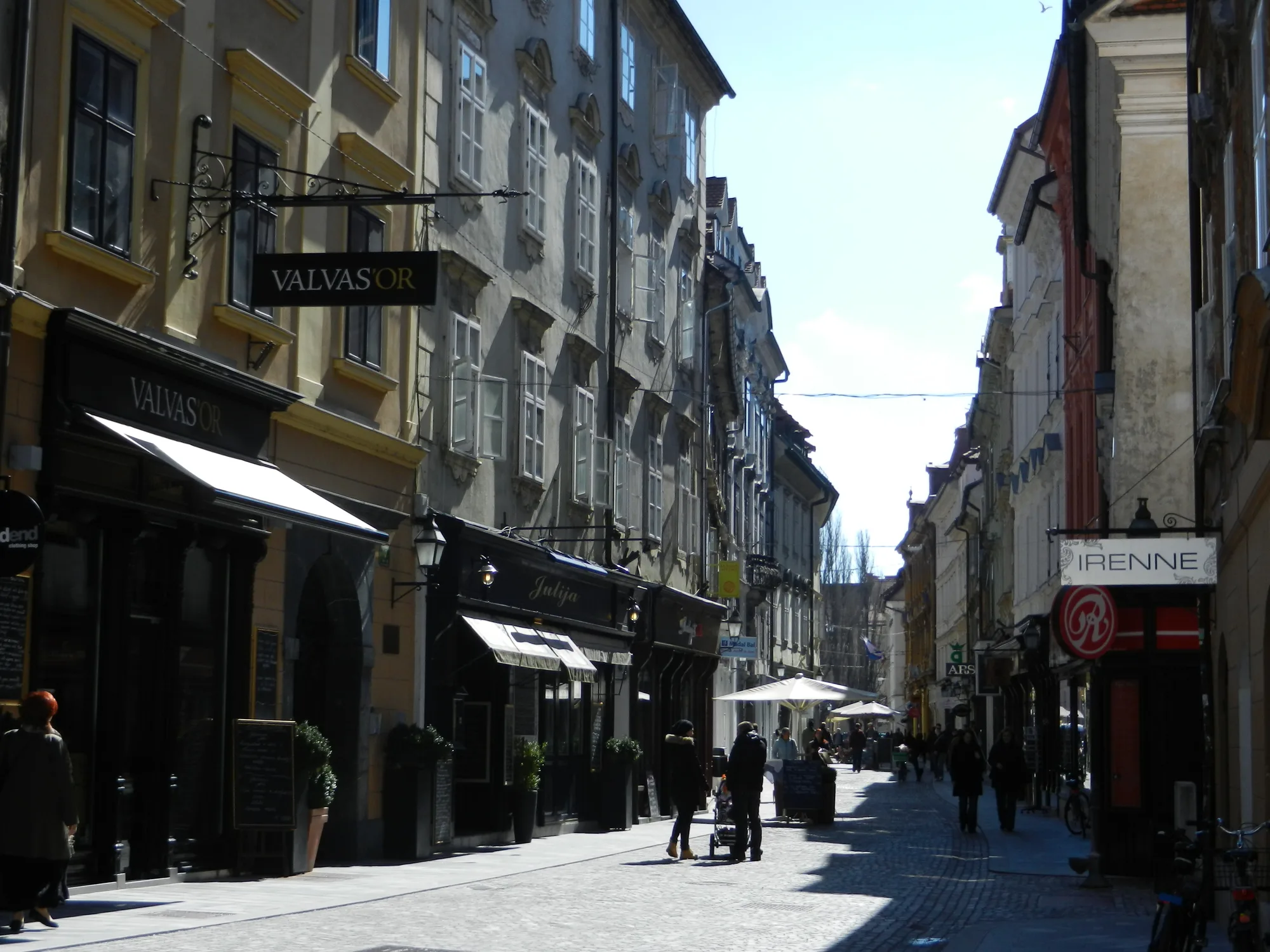
- • Old Town lanes: Small streets that reward slow wandering
- • Castle Hill base: Where the city starts climbing toward the viewpoint
Bridges Worth Crossing (Again)
In Ljubljana, bridges are the landmarks. They’re not just crossings—they’re places to pause, take photos, and watch the river scene.
Bridge Highlights
- Triple Bridge: The city’s signature crossing and most iconic photo angle
- Dragon Bridge: Four dragons guarding the river—quick, memorable, and very Ljubljana
- Riverside market arcades: A “walkable landmark” with great light and rhythm
Must-See Landmarks
Ljubljana Castle
The easiest way to “get” Ljubljana: take in the view, then use Castle Hill as a compass for the rest of Old Town. Go late afternoon if you want the best light.
Central Market
Even if you don’t buy anything, the market area is pure Ljubljana—produce, pastries, and the city’s everyday food culture concentrated in one walkable spot.
Ljubljana Cathedral (St. Nicholas)
A short, worthwhile detour from the riverfront: baroque interiors and a sense of the city’s historic heart.Official info ↗
Town Hall + Town Square
The civic core of the Old Town—easy to combine with a Cathedral stop and a river loop.Official info ↗
Congress Square
A beautiful open civic space close to the Old Town core—great for a short “air + space” break between lanes and bridges.Official info ↗
Cobbler's Bridge
A bridge that feels more like a small public room over the water. Historically, it was associated with shoemakers’ stalls; today it’s a beautiful place to pause, people-watch, and connect river walks on both banks.Official info ↗
Plečnik Details
Architect Jože Plečnik shaped much of the city’s riverside feel. Look for human-scale design moments—colonnades, bridges, and subtle geometry that makes the center feel cohesive.
Planning note: for the latest market details (special events, seasonal changes), the official page is the handiest place to glance.Ljubljana Central Market ↗
Exploring Tips
- • Best time: Early morning (7-9 AM) or evening (after 6 PM) for fewer crowds
- • Walking: Old Town is compact—2–3 hours for the core, longer if you add cafés
- • Hidden gems: Leave the river for a few streets, then return—repeat
- • Best photo light: Late afternoon on bridges and by the market arcades
- • Castle timing: Do it once per trip—preferably at golden hour
- • Markets: Morning is best for browsing and atmosphere
Official Links (Landmarks, Visitor Info)
If you want the most current opening times and visitor notes, these official pages are the quickest way to confirm details.
Old Town Mini‑Guides
Want a deeper dive without adding more planning? These pages give you the story, the route, and the best way to visit each landmark.
A Simple Old Town Walking Loop
The beauty of Ljubljana’s Old Town is that you don’t need a map app or a tight schedule to see the best of it. The Ljubljanica river curls through the center in a gentle bow, and almost everything worth seeing sits within a few minutes of its banks. The single most reliable way to enjoy the place is simply to walk the loop, crossing back and forth on the bridges as the mood takes you, and letting the river be your compass.
Start at Prešeren Square, the lively heart of the city, with the Prešeren monument facing the pink façade of the Franciscan Church of the Annunciation. From here, step onto the Triple Bridge and cross to the right bank, then turn upriver toward the Central Market and its long riverside colonnades. Pause at the Dragon Bridge to meet the four famous dragons, then loop back over Butchers’ Bridge with its love locks and modern sculptures.
Drift down Town Square past the Town Hall and the Robba Fountain, detour a few steps to Ljubljana Cathedral to admire its green domes and bronze doors, then continue south along the lanes toward Cobbler’s Bridge, a low, columned crossing that feels like a small public room above the water. From there it is a short stroll to the open expanse of Congress Square, with the trees of Zvezda park, before you return to the river and the bustle of Prešeren Square. The whole circuit takes about two to three hours at a wandering pace, longer if you stop for coffee.
If you would rather follow turn-by-turn directions, our self-guided walking tour spells out the route step by step, and the walking routes guide links it up with other parts of the city.
The Founding Legend & the Dragon
You cannot walk far in the Old Town without meeting a dragon. It is the city’s emblem, stamped on the coat of arms, cast in bronze on the Dragon Bridge, and printed on every other souvenir in the shop windows. The creature is tied to Ljubljana’s founding legend, the tale of Jason and the Argonauts, who, the story goes, sailed up the rivers of this region on their way home with the Golden Fleece and slew a marsh dragon that lived in the wetlands here.
Whether or not you take the myth literally, it gives the city a thread of identity that ties the riverfront together. The dragon has come to stand for strength, courage, and the watchful spirit of Ljubljana, and locals are genuinely fond of it. Watching the four dragons on the Dragon Bridge glare out over the water is one of the small, memorable pleasures of an Old Town walk.
Beneath the legend sits a long, layered history. The center grew up below the hill where the castle now stands, and the site has been settled, fortified, and rebuilt many times over the centuries. A major earthquake in 1895 reshaped the cityscape, prompting a wave of rebuilding that gave Ljubljana much of its present-day character. The result is an Old Town that wears medieval, baroque, and early-twentieth-century layers all at once, which is part of what makes wandering it so rewarding.
Plečnik’s Mark on the Center
More than any other figure, the architect Jože Plečnik shaped the way Ljubljana’s center feels today. Working through the first half of the twentieth century, he treated the city as a single composition, designing bridges, embankments, colonnades, and public spaces that knit the riverfront into a coherent whole. His vision was so distinctive and so complete that a selection of his works in Ljubljana was inscribed on the UNESCO World Heritage list in 2021.
You meet his hand again and again on an Old Town walk, often without realising it. The Triple Bridge is his, an inspired solution that widened a single old crossing into a fan of three. The riverside arcades of the Central Market are his too, a long colonnade that turns a everyday food hall into one of the loveliest stretches of the river. Cobbler’s Bridge, with its tall stone columns, carries his signature sense of human scale, monumental in spirit yet gentle in feel.
The pleasure of his work is in the details: the way a balustrade frames a view, the rhythm of columns along a promenade, the careful geometry that makes the center feel calm rather than crowded. If the architecture catches your eye, our guide to Plečnik’s architecture follows his trail across the whole city.
The Three Great Squares
Ljubljana’s Old Town is strung between a handful of squares, each with a different character, and learning their personalities helps you orient yourself quickly. The first and busiest is Prešeren Square, the social hub where the city seems to meet. The statue of the poet France Prešeren looks across to the unmistakable pink Franciscan Church of the Annunciation, and the square opens straight onto the Triple Bridge, making it the natural front door to the riverfront.
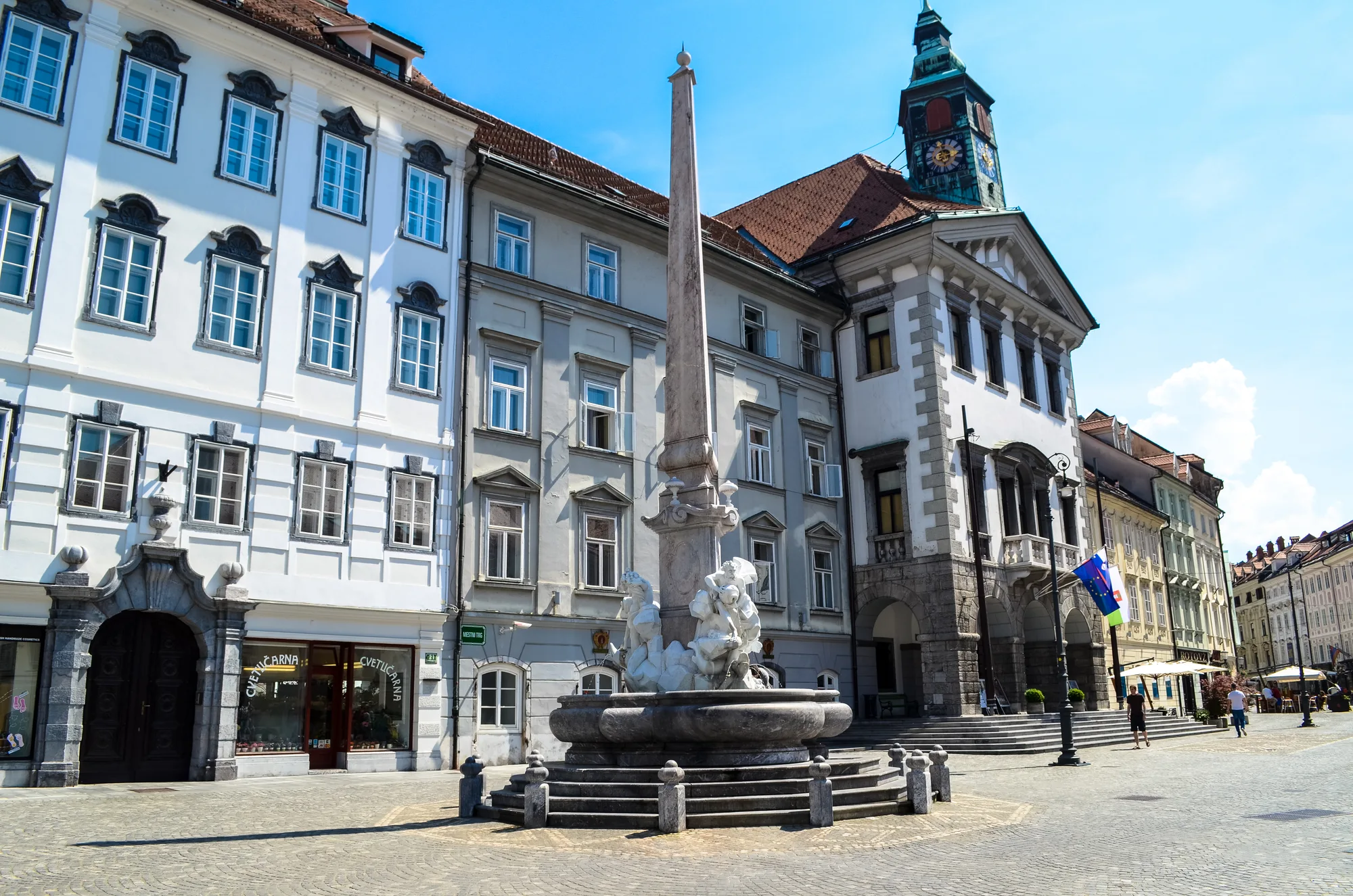
A short walk along the river brings you to Town Square (Mestni trg), the civic heart of the medieval town. Here you will find the Town Hall (Mestna hiša) and, in front of it, the Robba Fountain, a baroque fountain of three rivers that has become one of the Old Town’s most recognisable monuments. The lanes around it are narrow and atmospheric, lined with old façades and small shops, and they connect easily to Ljubljana Cathedral just behind.
For contrast, head a few minutes west to Congress Square (Kongresni trg), a large, open civic space backed by the leafy Zvezda park. After the close-packed lanes of the old core, its sense of air and space comes as a relief, and it is a fine spot to sit for a moment between landmarks. Our dedicated Congress Square guide has more on its history and surroundings.
Where to Eat & Drink in the Old Town
Much of the joy of the Old Town is edible. The riverside terraces along both banks are the obvious draw, and on a warm evening the stretch between the Triple Bridge and Cobbler’s Bridge fills with diners watching the water go by. These spots trade partly on their setting, so they can run busy and a little pricier than side-street places, but a slow drink with a river view is one of the simple pleasures of the city. Prices and hours shift with the season, so confirm current details on the spot before you settle in.
For something more local and less polished, the Central Market is the real heart of Old Town food culture. Browse the produce stalls, pick up pastries or fresh fruit, and look for the riverside fish market and small food counters tucked under Plečnik’s colonnade. It is the best place to assemble an inexpensive, very Ljubljana lunch and eat it by the water. The market is liveliest in the morning.
Choose your spot by mood: riverside terraces for the view, the lanes around Town Square for cosier sit-down meals, and the cafés around Prešeren and Congress squares for coffee and people-watching. For specific recommendations, see our guides to the best restaurants, best bars, and best cafés in the city.
Best Photo Spots & Light
The Old Town photographs beautifully, but timing makes the difference between a snapshot and something special. Early morning, before the terraces fill, gives you empty bridges, soft light, and clean reflections on the river. The hour after sunrise is the best window for the classic view across the Triple Bridge toward the Franciscan Church, with Castle Hill rising behind.
Late afternoon and golden hour suit the market arcades and the riverside colonnades, when warm light slides along the columns and the water turns gold. For the famous dragon close-ups, the Dragon Bridge works at almost any time, but softer end-of-day light flatters the bronze. After dark, the bridges and façades are lit, and the river picks up the reflections for a different, more romantic set of shots.
For the widest view of the whole Old Town, climb to Ljubljana Castle in the late afternoon, when the rooftops glow and the river is easy to trace below. From the hill you can pick out every square and bridge you walked earlier, which makes a fine way to round off a day in the center.
Quiet Corners Away From the Crowds
The central bridges and squares can get busy in high season, but escaping the crush takes only a short walk. Step a street or two back from the river and the lanes empty out almost at once, revealing quiet courtyards, small shops, and façades that most visitors hurry past. The simple trick is to leave the riverbank, wander the side streets for a few minutes, then return; you see far more, and you share it with far fewer people.
For genuine calm, follow the river upstream, away from the busiest terraces, toward Špica, a relaxed riverside spot where locals come to sit by the water. It feels a world away from the center yet is only a pleasant stroll along the bank. Our Špica guide covers the walk and the atmosphere in more detail.
Cobbler’s Bridge, with its benches above the water, is another spot that often stays peaceful even when the more famous crossings are crowded, and the lanes climbing gently toward the base of Castle Hill reward slow, unhurried wandering. For more ideas, our hidden gems guide gathers the corners that most quick visits miss.
Old Town Through the Seasons
The Old Town has a different mood in every season, and there is no truly bad time to visit. Spring and early summer bring the riverside terraces to life, with blossom in the parks and long, light evenings. The center is at its most sociable, and the market overflows with seasonal produce. It is also the busiest stretch, so the early-morning trick for quiet photos pays off most then.
High summer is warm and lively but can feel crowded around the main bridges in the middle of the day; mornings and late evenings are the sweet spots. Autumn is, for many, the loveliest season here, with softer light, golden trees in Tivoli and Zvezda parks, fewer crowds, and a comfortable temperature for walking the full loop without rushing. Ljubljana, which was European Green Capital in 2016, feels especially good on foot when the weather cools.
Winter is quieter and atmospheric. The cafés turn cosy, and from late November the riverfront and squares glow with festive lights. It can be cold and damp, so dress warmly and watch your footing on the cobbles, and check that markets and attractions are running their usual hours, as some shorten in the colder months.
Accessibility & Practical Notes
The good news for almost everyone is that the central core is pedestrianised, so you explore it free of traffic, and the distances are short. The catch is the surface: much of the Old Town is paved with cobbles and stone setts that look wonderful but are uneven underfoot and can turn slippery in the rain. Flat, comfortable shoes with a bit of grip make the whole visit easier and more enjoyable.
Travellers using wheelchairs or pushing strollers, and anyone with limited mobility, will find the smoother riverside promenades far gentler than the steeper, rougher lanes that climb toward the castle. To reach the castle itself, the funicular from its lower station near Krekov trg, by the Central Market, avoids the climb entirely; confirm its current times and prices on the official site before you set out, as they vary by season.
For getting to and around the center, our getting around guide covers the practicalities, and if you are still shaping your trip, the first-time visitor guide and the one day in Ljubljana itinerary put the Old Town in the wider context of the city.
Old Town FAQs
How long do you need for Ljubljana Old Town?
For the core loop (squares, bridges, market area), 2–3 hours is enough. Add the castle hill, museums, or long café stops and you’ll happily fill half a day or more.
Where should you start your Old Town walk?
Prešeren Square is the easiest start: it connects directly to the Triple Bridge and the main riverside promenade.
What are the must-see landmarks in Ljubljana Old Town?
Top essentials are the Triple Bridge area, Dragon Bridge, the Central Market arcades, the cathedral, and a castle viewpoint for the “big picture” view.
Is Ljubljana Old Town pedestrian-friendly?
Yes—the central core is designed for walking and is easy to navigate by landmarks and river loops. Comfortable shoes are all you need.
What’s the best time to visit Old Town?
Early morning is calm and photogenic, while evenings are perfect for the riverside vibe and bridge loops after dinner. Golden hour is excellent for the market arcades and river reflections.
How do you get up to Ljubljana Castle from the Old Town?
You can walk up one of the footpaths from the Old Town in roughly ten to fifteen minutes, or take the funicular from its lower station near Krekov trg, by the Central Market. The funicular is €6 return — or €19 on a combined ticket with the castle — and is the easiest option if you want to save your legs, while the walk down afterwards is pleasant. It runs later in summer than in winter, so it is worth a glance at the official site for the day’s last departure.
Is the Old Town easy to walk on with the cobblestones?
The central streets are largely paved with cobbles and stone setts, which look beautiful but can be uneven and slippery when wet. Flat, comfortable shoes with decent grip make a real difference, and travellers using wheelchairs, strollers, or with limited mobility should plan a gentler route along the smoother riverside promenades rather than the steeper lanes toward the castle.
Where is the love-locks bridge in Ljubljana?
That is Butchers’ Bridge (Mesarski most), which crosses the river between the Central Market and the opposite bank. It is hung with padlocks left by couples and decorated with striking modern sculptures, and it sits just a short stroll from the Triple Bridge and the Dragon Bridge.
Why are there dragons all over Ljubljana?
The dragon is the city’s emblem, most famously appearing as the four bronze guardians on the Dragon Bridge. It is tied to the founding legend of Jason and the Argonauts, who, the story goes, slew a marsh dragon in the area. You will spot the dragon on the city’s coat of arms, on souvenirs, and woven into local identity all over town.
Is the Old Town worth visiting in winter?
Yes. The crowds thin out, the cafés feel cosy, and from late November the riverside and squares are strung with lights for the festive season. Dress warmly, watch your footing on damp cobbles, and note that some markets and attractions run on shorter winter schedules — worth a quick look when you plan a winter visit.
Next reads Pair this page


