Why Winter Works Here
Ljubljana doesn’t demand perfect weather. The center is compact, the river loop is always a good idea, and the city’s café culture is practically built for cold afternoons.
Winter is a great time to lean into the “slow” side of the capital: museums, warm interiors, early sunsets, and evenings that feel made for a final bridge loop before dinner.
There’s a practical case for winter too. Summer is Ljubljana’s busiest stretch, when the riverside terraces are packed and the castle funicular has queues; in winter the same streets feel calmer and more local. You’ll wait less, walk more easily, and often find the city quietly getting on with its own life — students filling the cafés, the market traders bundled up at their stalls, locals taking the same evening stroll along the Ljubljanica that you are.
The trade-off is honest: days are short and the weather can be cold, damp, or grey. But Ljubljana is unusually well suited to that. Almost everything you’d want to do — eat, drink coffee, see art, wander the Old Town between showers — is either indoors or only a minute from somewhere warm. Plan around the rhythm of the season rather than fighting it and a winter trip can feel more relaxed than a summer one. If you’re weighing up months, our best time to visit guide lays out the seasonal trade-offs in more detail.

December: The Festive Month
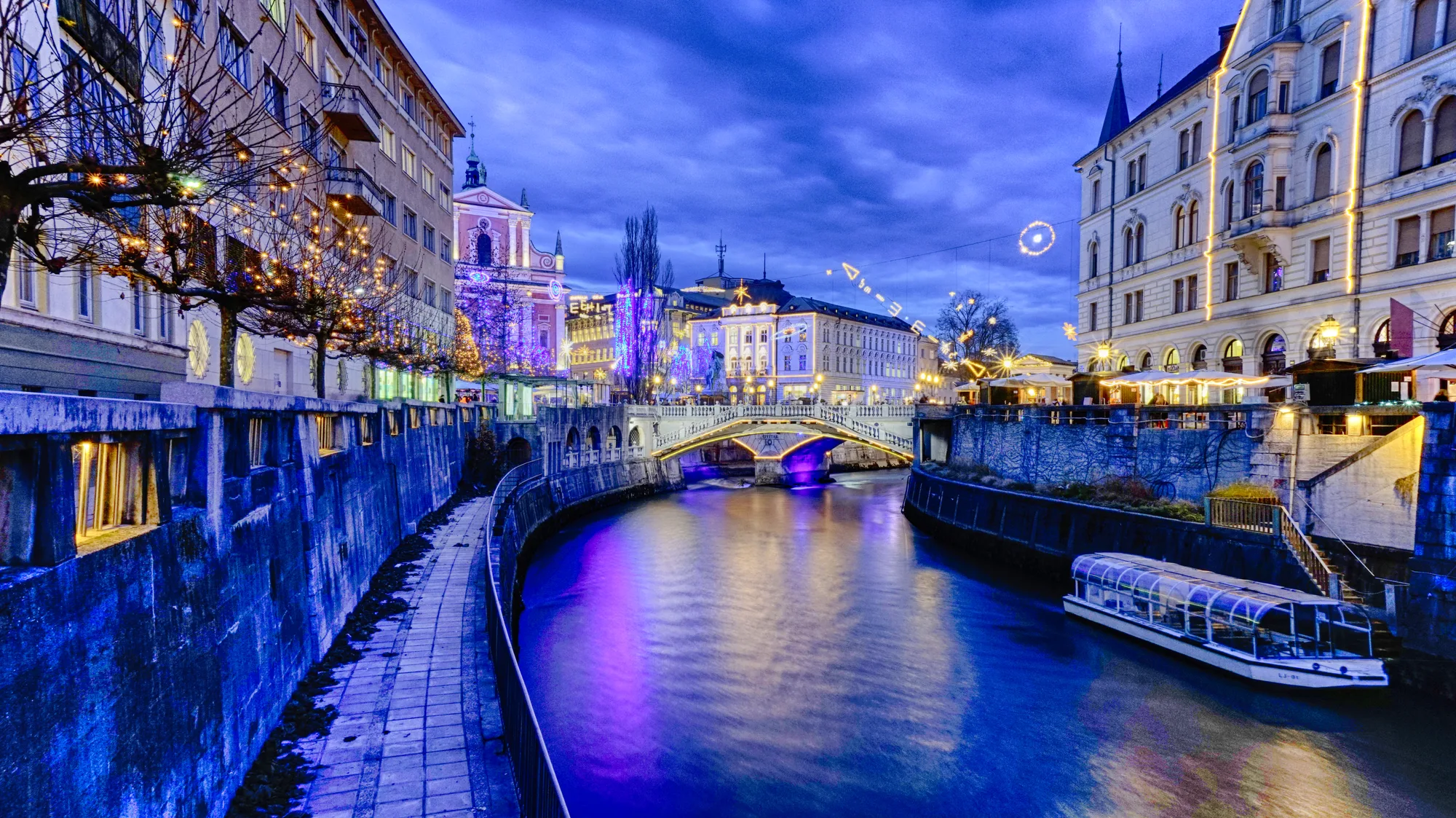
If you’re visiting in December, expect the city to turn on its most photogenic settings: lights, market stalls, and that warm “let’s stay out a little longer” energy along the river. Exact dates shift year to year, so use official listings to plan precisely.
A Winter Day Plan (That Feels Like a Vacation)
Morning
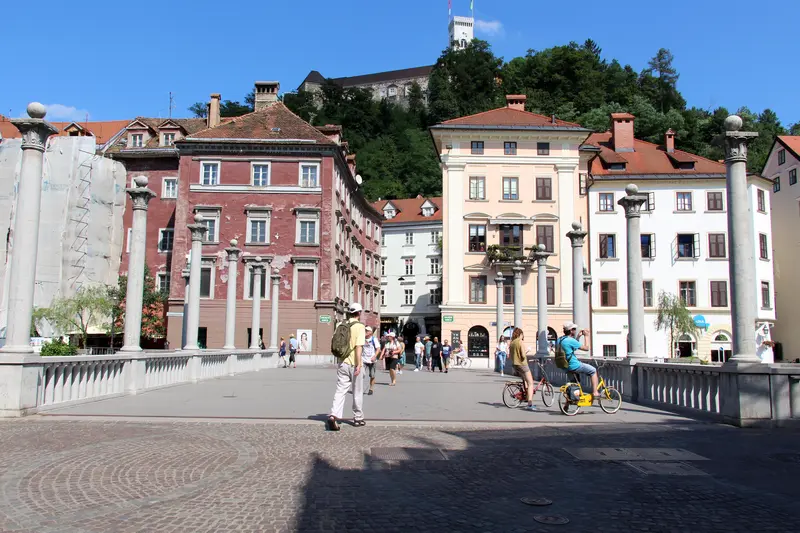
Start with coffee and a riverside walk while the city is calm. Add the Central Market area for an easy “locals in motion” scene.
Midday
Choose one indoor block: a museum pair, a slow lunch, and a long dessert-and-espresso stop. Winter is permission to linger.
Late afternoon
Go for the viewpoint when the light turns soft—castle hill is the classic—and then walk down for dinner.
Evening
Finish with a bridge loop and a cozy bar or wine stop. Ljubljana evenings are the main winter upgrade.
What the Weather Is Actually Like
It helps to set expectations. Ljubljana sits in a basin surrounded by hills and, further out, the Alps, which gives it a properly continental winter: cold, sometimes frosty, occasionally snowy, and prone to grey, damp, foggy spells when the cloud settles in the valley. None of that is a reason to stay away — it’s simply the texture of the season, and it’s part of why the festive lights and warm café windows feel so good.
Snow is possible but not guaranteed on any given week, so treat a white scene as a bonus rather than a plan. The more reliable feature is the cold and the short daylight: by mid-afternoon the light is already golden, and by early evening it’s dark. That changes how you structure a day — front-load anything outdoors, then let the long evening belong to dinner, drinks, and a lamp-lit walk along the river.
One upside of cold, dry winter days: visibility. On a clear, crisp afternoon the view from Ljubljana Castle can be sharper than in hazy summer, with the Kamnik Alps standing out cleanly on the horizon. If the sky is blue, prioritise the climb.
What to Pack
- • Comfortable walking shoes with decent grip (cobblestones + winter evenings)
- • A warm layer and a windproof outer layer for river walks
- • A small umbrella or rain shell for quick weather swings
- • Gloves, a scarf, and a hat — evenings by the water feel colder than the daytime figure suggests
- • Something “nice-ish” for a cozy dinner—Ljubljana evenings lean stylish
The single most useful thing is grippy footwear. The Old Town’s cobbles get slick when wet or icy, and you’ll be doing a lot of slow walking on uneven surfaces. Beyond that, layering beats one heavy coat: interiors are warm, so you want to be able to peel off easily when you duck into a café or museum and bundle back up for the next stretch outside.
Where to Warm Up: Cafés, Museums & Indoor Time
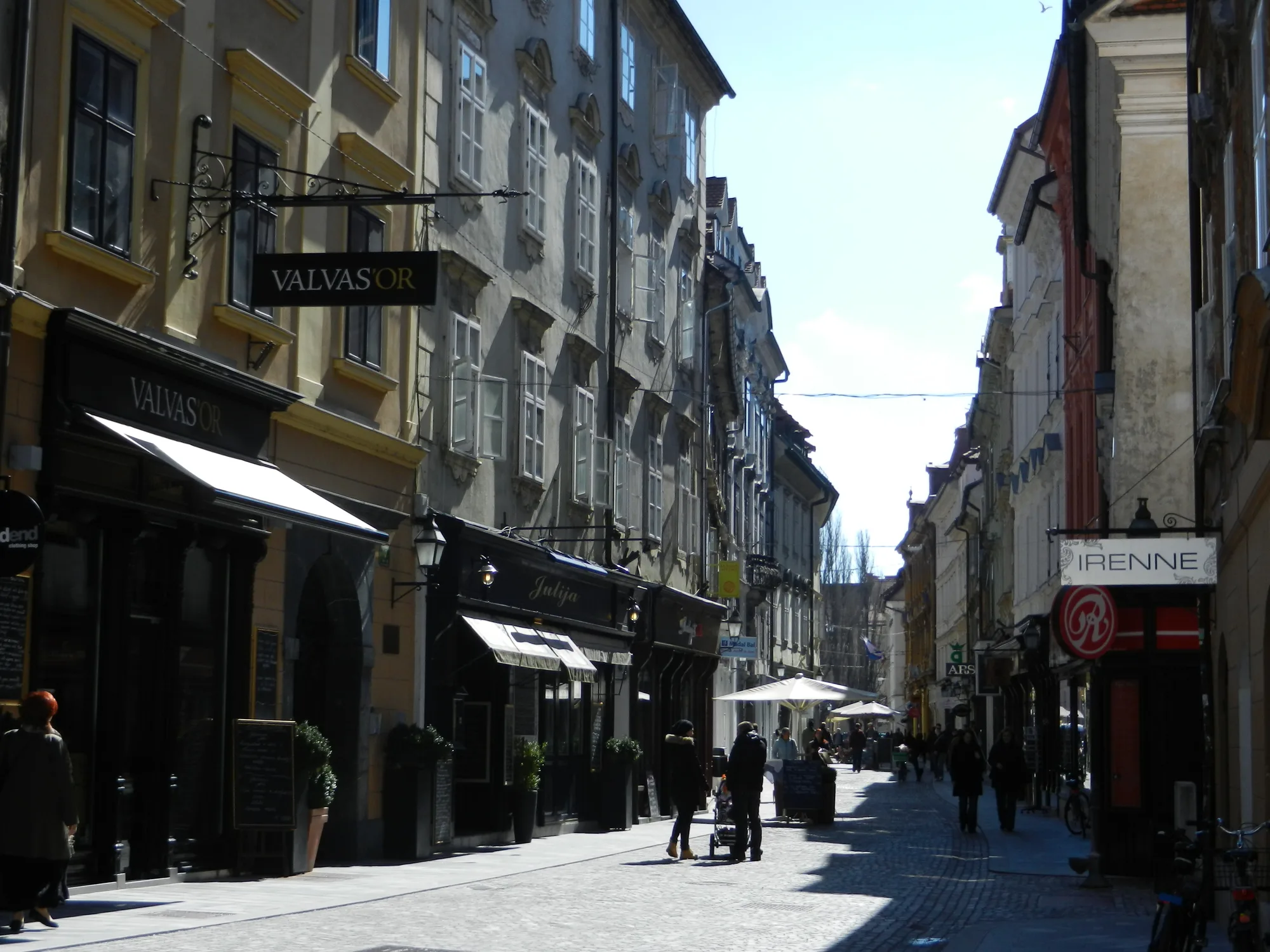
Winter is when Ljubljana’s indoor culture earns its keep. The city has a deep café tradition, and a long coffee (or a hot chocolate that arrives almost as thick as pudding) is a perfectly legitimate way to spend an hour while the weather sorts itself out. Treat cafés as part of the itinerary, not an afterthought: pick a window seat, watch the street, and let the cold wait outside.
Museums are the other natural anchor. A cold or wet afternoon is the ideal time to give one proper attention rather than rushing through. The compact center means you’re rarely more than a few minutes from a gallery or collection, and you can easily chain a museum with a café and a short river walk into a satisfying, low-effort day. Our museums guide sorts the options by interest so you don’t over-stack your day — one main museum plus a coffee usually beats trying to see three.
If you want a single, flexible template for a bad-weather day, the rainy-day itinerary turns short outdoor moments and long warm-ups into a plan that still feels like the city.
How Many Days, and a Sample Two-Night Winter Trip
Two nights is the sweet spot for a winter break here. It gives you one classic day and one slower day, which is plenty to feel the city without the pressure to “see everything.” Here’s a simple shape that works in cold weather:
- • Day one: a relaxed Old Town and river morning, lunch indoors, then the castle for golden hour and a riverside dinner. If it’s December, the festive lights extend the evening naturally.
- • Day two: a slower pace — a museum, a long café stop, a wander through Tivoli Park if the weather allows, and a final bridge loop after dark.
Add a third day if you want a weather-proof excursion. Slovenia’s show caves are a classic winter day trip precisely because they’re indoors and a steady temperature year-round — useful insurance against a grey forecast.
If the Weather Is Wild: Swap in a Day Trip
When the forecast gets moody, choose a weather-proof highlight: caves are a classic because they work year-round. Keep your return time realistic—you’ll still want dinner back in Ljubljana.
See day trips →Winter in Ljubljana FAQs
Is Ljubljana worth visiting in winter?
Absolutely. The city feels cozy and atmospheric, and the center is still wonderfully walkable. Winter is great for cafés, museums, and golden-hour strolls when the crowds are lighter.
What’s Ljubljana like in December?
December is peak “festive” season: lights, warm drinks, and a lively evening atmosphere by the river. Dates and programming vary each year—check the official calendar for your exact travel week.
What should you do on a cold or rainy day?
Plan an indoor loop: museum time, a long café stop, and a castle viewpoint break when the clouds lift. Caves are also a great day-trip option when weather is unpredictable.
How many days do you need in winter?
Two nights is a sweet spot: one classic Old Town/castle day, and one slower day for Tivoli, museums, and neighborhood wandering.
Do you need a car in winter?
Not for the city. Stay central and you can do most of Ljubljana on foot. Add a car only if you want a flexible winter road-trip around Slovenia.
Does it snow in Ljubljana in winter?
It can. Ljubljana sits in a basin ringed by hills and the Alps, so winters are genuinely cold and snowfall is common, though how much (and how long it lasts) varies a lot from year to year. Expect a realistic mix of crisp clear days, grey damp spells, and the occasional dusting that makes the Old Town look like a postcard. Pack for cold and check the forecast close to your dates rather than assuming a white Christmas.
What are the daylight hours like in winter?
Short. Around the winter solstice the sun is up for roughly nine hours, with golden hour arriving in the mid-afternoon. That is actually good news for travelers: you get the city’s best light without staying out late, and the long evenings are made for warm cafés and festive strolls rather than sightseeing.
Is New Year’s Eve a good time to be in Ljubljana?
If you like a lively street party, yes. Ljubljana traditionally hosts open-air New Year celebrations in the central squares and along the river, often with live music and a crowd gathered below the castle. It is busy and atmospheric rather than glitzy. Book accommodation early, dress very warmly, and check the official Festive Ljubljana program for the current line-up and any ticketed elements.
Next reads Pair this page