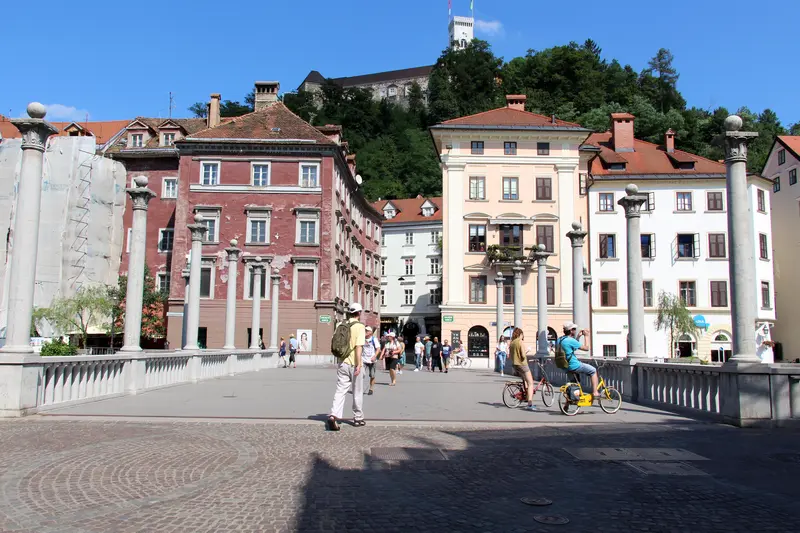
Yes—Ljubljana Is Walkable (In the Way Travelers Mean It)
Ljubljana is one of the easiest European capitals to do on foot. The center is compact, the river acts like a natural guide, and the pedestrian zone keeps the vibe calm.
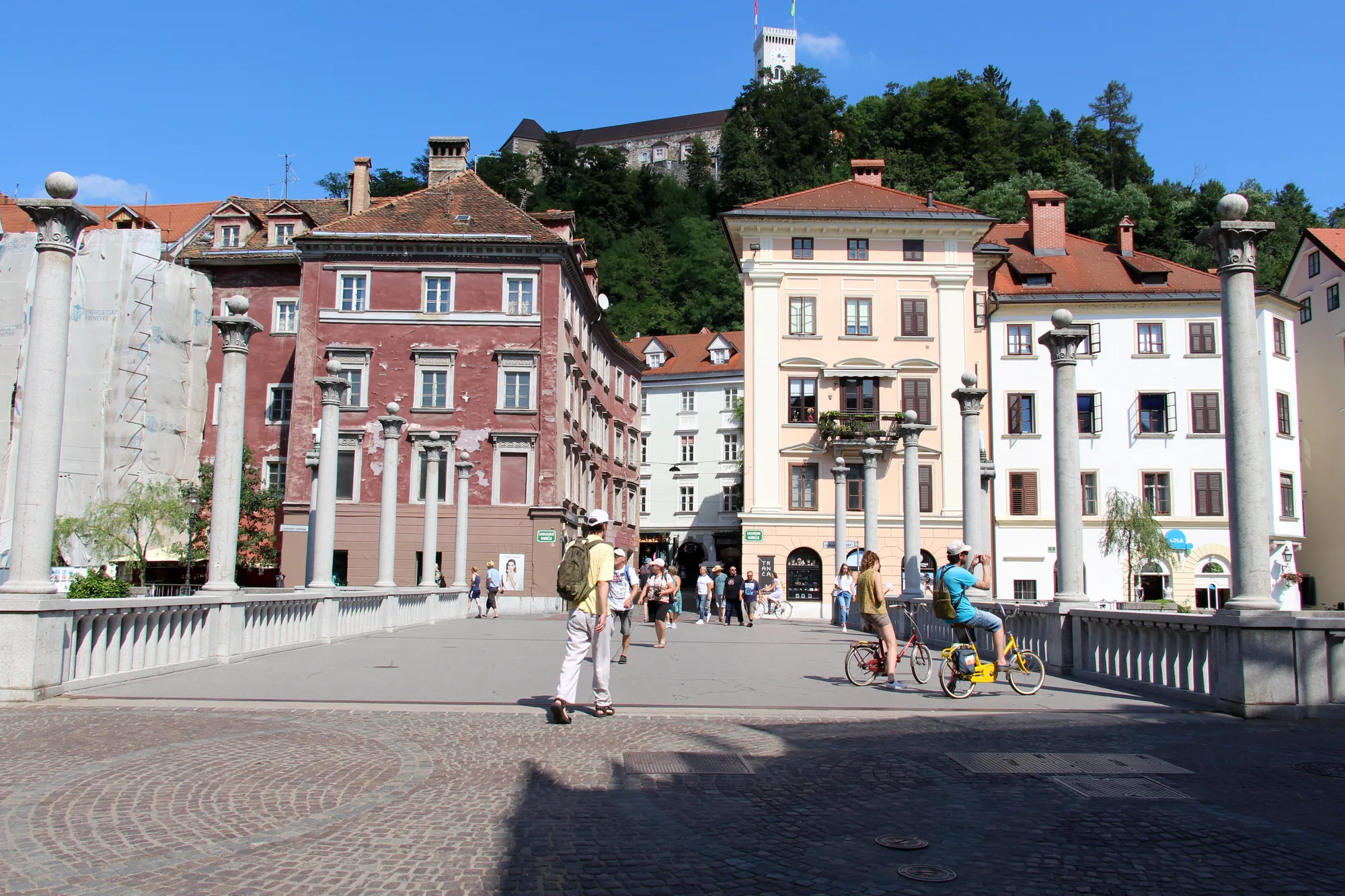
“Walkable” here doesn’t mean you’ll do 25,000 steps by accident. It means the best parts of the city connect naturally: bridges, squares, market arcades, cafés, and that gentle castle-hill skyline you keep seeing in the background.
The walkability formula: stay near the river/Old Town, do the center on foot, add one “green” walk (Tivoli), and use transport only when you’re leaving the central loop.
Map: The “Walkable Core”
If your accommodation is near this cluster, you’ll feel like Ljubljana is made for you.
What “Walkable” Looks Like (Realistic Distances)
Most center-to-center walks are short. The city rewards the “wander, then choose” style: pick one anchor, then let the river guide you to the next.
- • Station area → Prešeren Square: roughly 15–20 minutes on foot
- • Prešeren Square → Central Market arcades: a few minutes
- • Old Town core → Tivoli Park entrance: a comfortable stroll
- • The main “extra effort” moment: castle hill (funicular available)
Tip: Ljubljana feels best when you keep plans in loops. A loop naturally ends where you started—so you’re never “stuck far away.”
The Only Hill: Castle (Optional)
The castle is the one central “uphill” moment. It’s not extreme, but it can feel steep if you’re tired or it’s hot. The funicular makes it easy to keep views in your plan without committing to a climb.
Prefer views without effort? Nebotičnik is the easiest skyline moment in town.
Surfaces, Shoes, and Weather
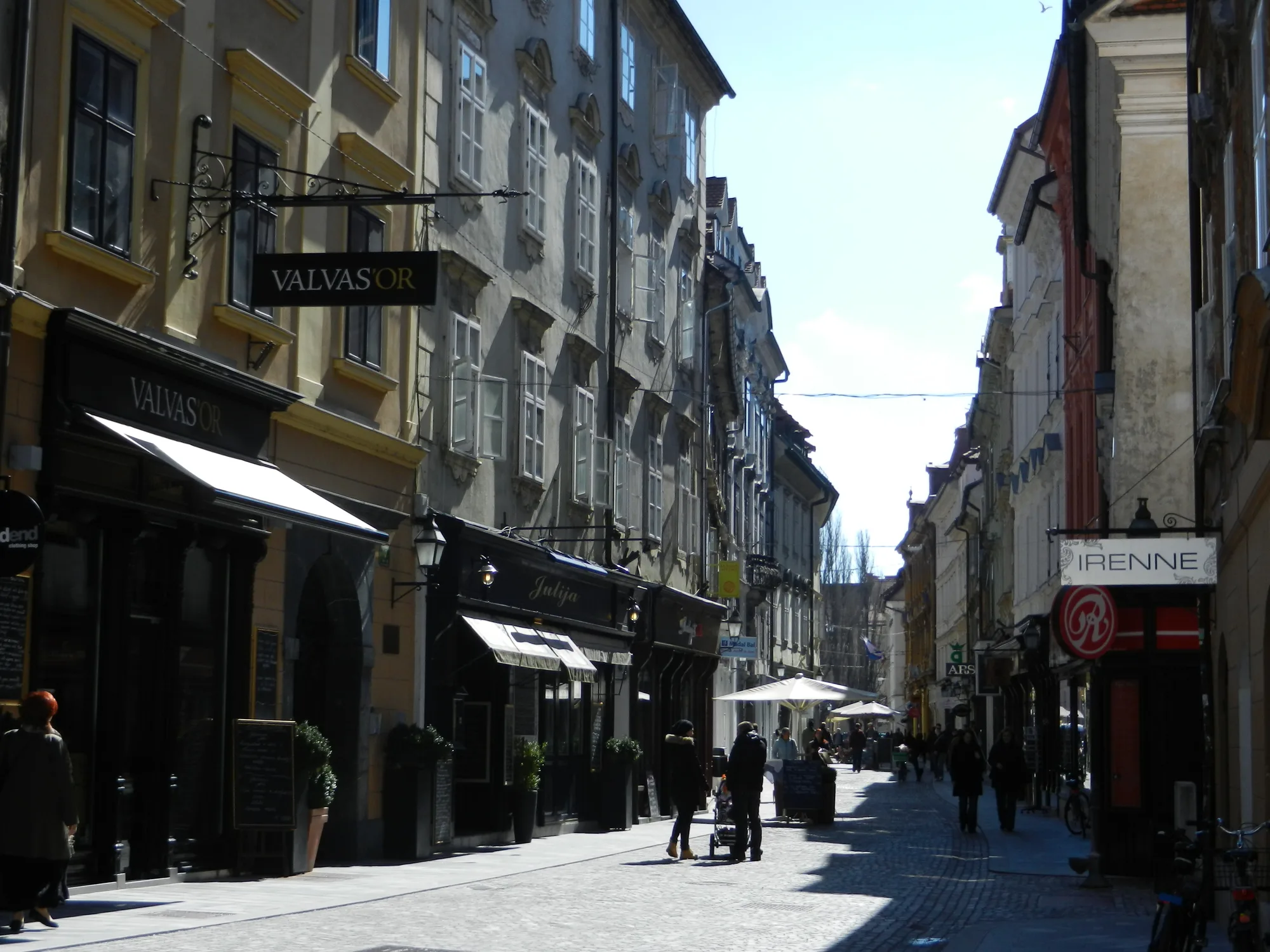
Expect some cobbles and polished stone in Old Town. Comfortable shoes make the city feel smaller (and better). In winter or rain, prioritize routes with arcades and cafés so the day stays cozy.
Rain plan that still feels like Ljubljana: market arcades → museum → café → short river loop after dark.
The Best “First Walk” (If You Want to Feel the City Fast)
If you want an easy route that feels instantly like Ljubljana, do this loop. It’s short, photogenic, and naturally ends at food.
- 1) Prešeren Square
- 2) Triple Bridge
- 3) Central Market arcades
- 4) One extra bridge (Dragon Bridge for icons, or Cobbler’s Bridge for river reflections)
- 5) Dinner by the water
Why Ljubljana Is So Easy on Foot
Ljubljana’s walkability isn’t an accident — it’s the result of a deliberate decision to pull cars out of the heart of the city. Over the past couple of decades the centre has been progressively pedestrianised, with the riverbanks, the main squares, and many Old Town streets closed to through-traffic. The result is a calm, low-noise core where walking is the obvious way to get around and the river acts as a natural spine guiding you from one sight to the next.
It helps that the city is genuinely small. Ljubljana is a compact capital, and its highlights — the castle, the bridges, the market, Prešeren Square, and the edge of Tivoli Park — sit within a tight cluster rather than spread across distant districts. You’re rarely more than a short stroll from where you want to be, which is why so many visitors end up walking everywhere almost by default and barely think about transport at all.
For the few times you’d rather not walk, the city has gentle options that keep you out of a car: the free electric Kavalir buggies that ferry people short distances around the pedestrian zone, the castle funicular for the one real climb, and the standard bus network for outlying areas. But these are conveniences, not necessities — the default, and the most enjoyable way to experience Ljubljana, is simply on foot.
Ljubljana Walkability FAQs
Is Ljubljana walkable for tourists?
Yes. The Old Town and riverside core are compact and designed for walking. If you stay central, many top sights, cafés, and restaurants are within an easy stroll.
How far is the train/bus station from the center?
It’s close enough to walk for most travelers—roughly 15–20 minutes to the central squares (depending on your exact destination).
Is there a lot of uphill walking?
Not in the core. The main uphill moment is Ljubljana Castle. If you want views without the climb, use the funicular or choose rooftop viewpoints like Nebotičnik.
Is Ljubljana stroller- and kid-friendly on foot?
Generally yes—especially in the pedestrian zone. Some Old Town streets have cobbles and small curbs, so a sturdy stroller and flexible routes help.
What if it rains?
Ljubljana is still easy: swap long outdoor walks for the market arcades, museums, and café stops. Keep one short river loop for atmosphere and save viewpoints for a clear window.
Do you need public transport in Ljubljana?
For a centre-focused trip, usually not. The pedestrianised core is closed to most traffic and the main sights are within easy walking distance of each other. Buses become useful mainly for outlying areas or when you’re tired; the city centre itself is best on foot.
How many steps will you walk in a day?
It’s relaxed walking rather than a workout. Because everything clusters along the river, you cover ground in short, scenic hops between cafés and sights rather than long marches. A full day of sightseeing is comfortable for most people without feeling like a hike.
Next reads Pair this page