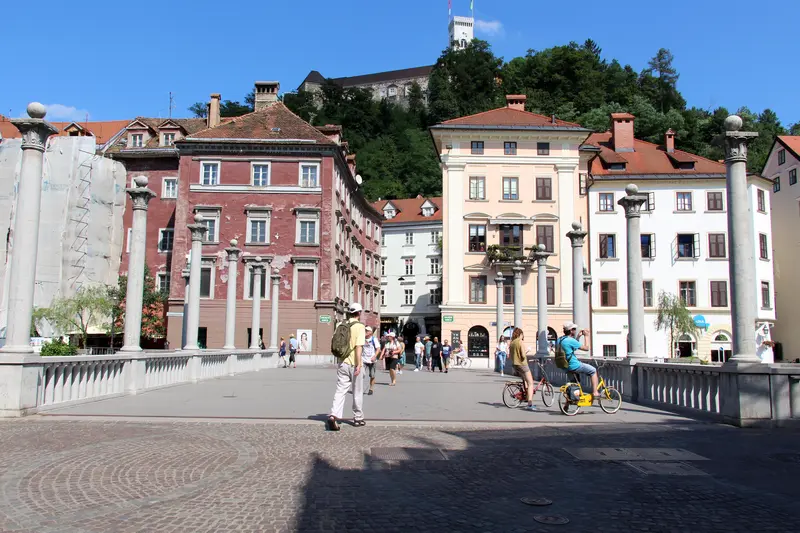
Why Žale Is Worth Visiting
Žale is not a “quick photo stop.” It’s a quiet place with weight—and also one of Ljubljana’s strongest architecture experiences. If Plečnik’s work along the river is about everyday city life, Žale is about meaning: how design can guide people through remembrance with dignity and restraint.
If you like cities with depth, Žale is one of the best “beyond the postcard” visits you can do.
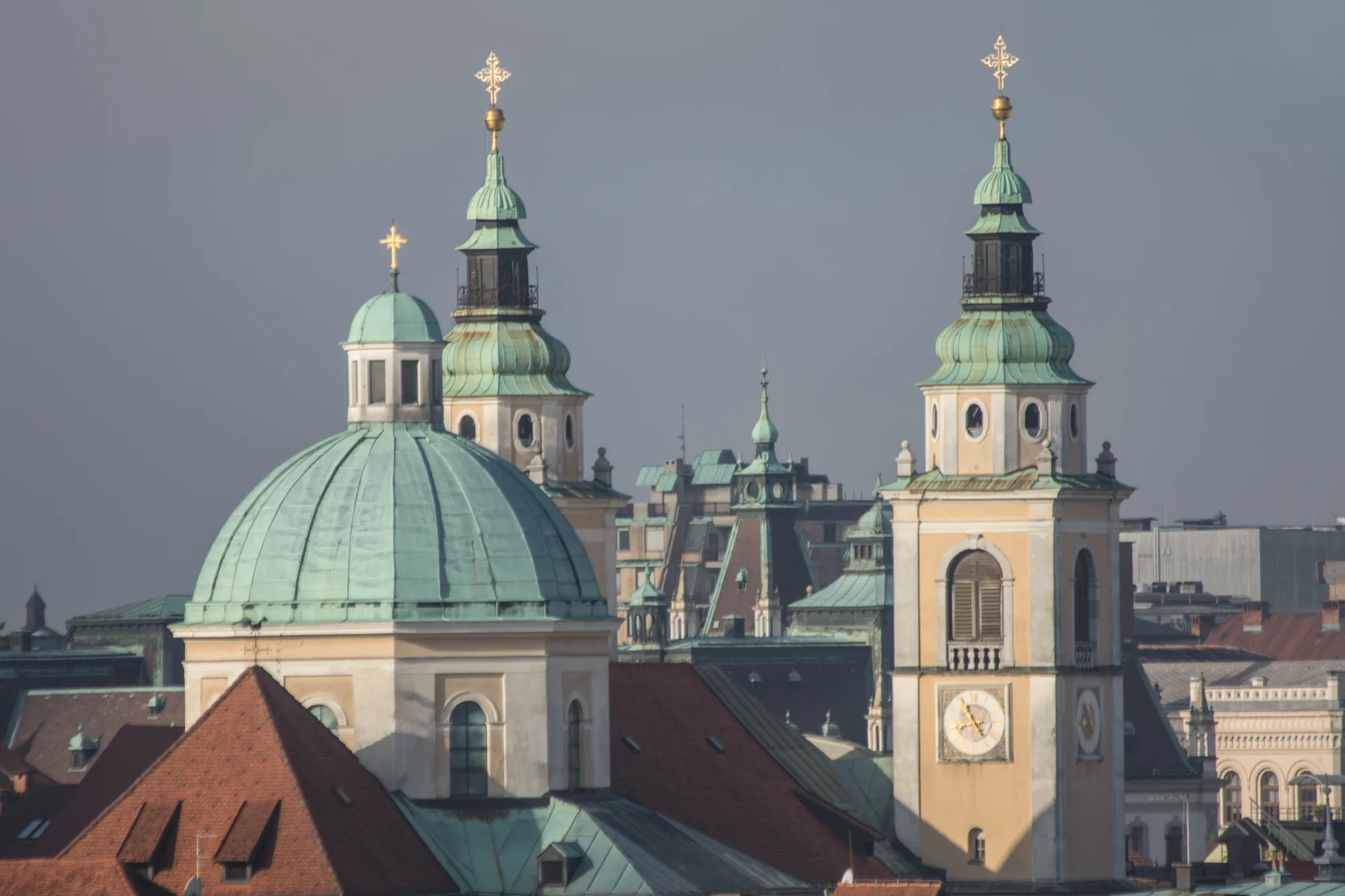
What Makes Žale a Design Landmark
Žale is Ljubljana’s main cemetery, but the part that draws visitors is the monumental complex Plečnik designed at its entrance in the late 1930s — sometimes called the “Garden of All Saints.” Rather than a single building, it’s a sequence of spaces: a grand colonnaded gateway, ceremonial courtyards, and a series of small chapels of remembrance where families once gathered before a funeral.
What’s remarkable is how each chapel is given its own distinct classical character — different proportions, different details — so that the ensemble reads almost like a small, dignified town of remembrance. It’s a masterclass in how architecture can shape ritual and emotion: the route, the thresholds, and the pauses are all designed to carry you gently through the experience of saying goodbye.
This is why Žale belongs alongside the river embankments and the Triple Bridge on any serious Plečnik itinerary. If his work in the centre is about everyday public life, Žale shows the same human-centred philosophy applied to the most solemn moments of all.
Map: Žale + Easy Add-Ons
Žale sits outside the tight Old Town loop, which is exactly why it feels like a deeper layer of the city.
How to Visit (Respectfully + Comfortably)
Žale is an active cemetery and a place of remembrance. A respectful visit makes the experience better for everyone.
- • Keep voices low and move slowly
- • Avoid taking photos of people in private moments
- • Treat the space as meaningful first, architectural second
- • If you’re unsure where to walk, follow the main routes and let the layout guide you
Best Time to Go
Morning or early afternoon is best: calmer atmosphere, better light, and easier to combine with one other cultural stop afterward.

A Perfect “Plečnik Depth Day”
Keep this day light and focused. Žale carries the emotional weight; your plan should leave space for it.
- 1) Morning: river + Plečnik essentials (Triple Bridge + market arcades)
- 2) Midday: Žale (slow visit)
- 3) Afternoon: one museum stop (Metelkova cluster works well)
- 4) Evening: dinner by the river
Žale Cemetery FAQs
Can tourists visit Žale Cemetery in Ljubljana?
Yes. Žale is a meaningful place and also a major architectural work. Visit respectfully, keep voices low, and treat it as both a public site and a space of remembrance.
Why is Žale famous?
Žale is closely associated with architect Jože Plečnik and is considered one of his most powerful works in Ljubljana—an example of human-centered design applied to remembrance and ritual.
How long should you plan for a Žale visit?
Plan about 60–90 minutes for a calm visit, longer if you want to move slowly and notice details. Pair it with one more cultural stop rather than stacking a packed schedule.
Is Žale part of Plečnik’s Ljubljana UNESCO listing?
Plečnik’s Ljubljana has UNESCO-recognized works. For the most accurate, current breakdown of included sites, use official UNESCO and Ljubljana Tourism sources.
How do you get to Žale without a car?
Many visitors go by city bus or a short taxi ride. Check current routes/timetables on official transport pages, since details can change.
What exactly is the famous part of Žale?
The architectural highlight is the monumental ceremonial entrance and the “Garden of All Saints”—a complex of chapels of remembrance arranged around courtyards, designed by Jože Plečnik in the late 1930s. The grand colonnaded gateway and the individual chapels, each in a slightly different classical style, are what make Žale a design landmark rather than just a cemetery.
Is photography allowed at Žale?
Discreet photography of the architecture is generally fine, but Žale is an active cemetery and a place of grief. Avoid photographing mourners or private moments, keep your camera away during funerals, and treat the space as meaningful first and architectural second.
Is Žale far from the city centre?
It sits north-east of the Old Town, outside the tight central loop—close enough to reach easily by bus or taxi, but far enough that it feels like a deliberate, deeper layer of the city rather than a quick add-on. Plan it as its own calm half of a day.
Official Links (Visitor Notes + Location)
Use official sources for current access notes, hours, and any visitor guidance.
Next reads Pair this page